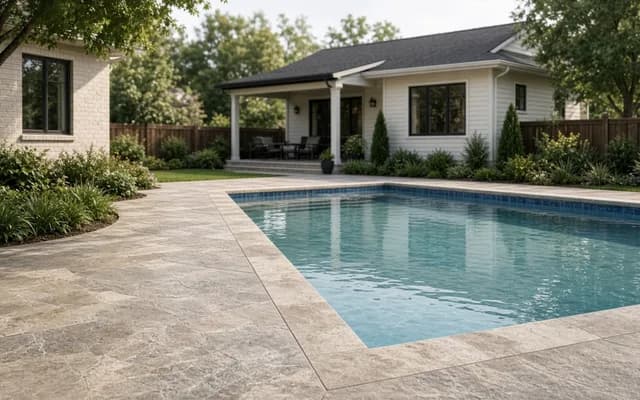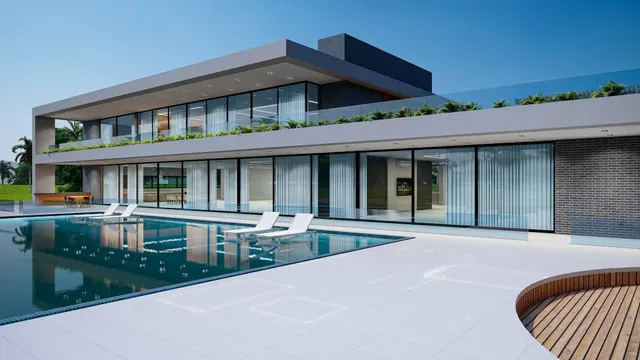
Gunite is a custom concrete shell built in place over months, with any shape and an integrated spa, and an interior that is resurfaced every 10 to 15 years. Fiberglass is a factory shell set in weeks, with a smooth, low-chemical surface and shapes limited to the manufacturer's molds and the crane's reach.
- Upfront cost
- $65,000 to $120,000 installed (HomeAdvisor 2026); $50,000 to $120,000+ (Thursday Pools 2026)
- $25,000 to $60,000 (HomeAdvisor 2026); about $74,000 to $113,000 by size (Thursday Pools 2026); $60,000 to $100,000 basic install (River Pools)
- Lifespan and recurring cost
- Shell lasts decades; resurfacing every 10 to 15 years at $10,000 to $20,000 (River Pools)
- Shell lasts decades; gelcoat rarely refinished; no liner
- Maintenance
- Plaster is porous and alkaline; more brushing, acid and algae attention
- Smooth non-porous surface; lower chemical use and less brushing
Full comparison, verdict and FAQs →
Both are faster and cheaper than gunite. Fiberglass costs more upfront and has no liner to replace; vinyl costs the least to build and carries a liner that River Pools says is replaced every 5 to 10 years. In freeze regions both are common, and the choice is usually total cost over fifteen years against upfront budget.
- Upfront cost
- $25,000 to $60,000 (HomeAdvisor 2026); about $74,000 to $113,000 by size (Thursday Pools 2026)
- $20,000 to $40,000 (HomeAdvisor 2026); $35,000 to $80,000 (Thursday Pools 2026)
- Lifespan and recurring cost
- Shell decades; no liner
- Structure decades; liner every 5 to 10 years at roughly $6,000 to $10,000 (River Pools)
- Maintenance
- Smooth surface, low chemical demand
- Soft surface; liner can be punctured by pets, toys or sharp objects; wrinkles from chemistry
Full comparison, verdict and FAQs →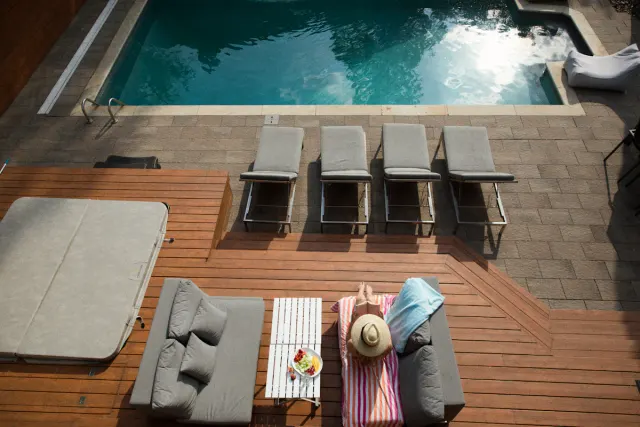
An in-ground spa is a small pool: excavated, plumbed to an equipment pad, finished in tile or plaster, and often attached to a pool as a spillover. A portable hot tub is an acrylic appliance on a pad with a dedicated circuit. HomeAdvisor's 2026 averages are $15,000 for in-ground and $6,000 for portable.
- Upfront cost
- $5,000 to $25,000, avg $15,000; custom above $35,000 (HomeAdvisor 2026)
- $2,000 to $11,000, avg $6,000 (HomeAdvisor 2026); $2,300 install labor
- Lifespan
- Shell lasts decades; finish refreshed with the pool
- 5 to 20 years depending on build quality (Fixr 2025)
- Maintenance
- Shares pool chemistry and equipment; heats slower when large
- Self-contained; $500 to $1,000 a year (HomeAdvisor); drain every 3 to 4 months
Full comparison, verdict and FAQs →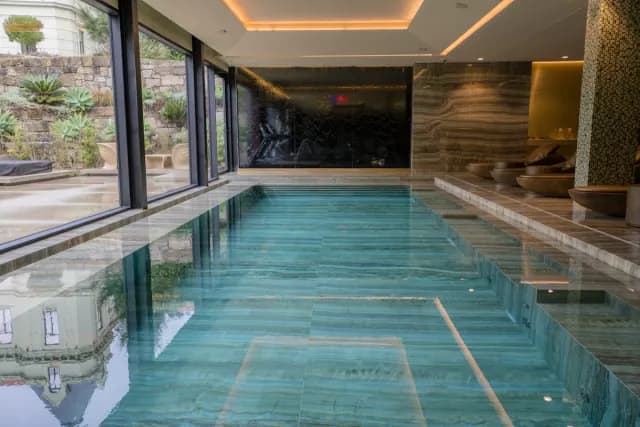
Concrete is poured as one slab, cheapest at Concrete Network's $6 to $11 per square foot for broom finish, and cracks where joints are missed. Pavers and travertine are set on a base at $12 to $45 per square foot, stay cooler, drain through the joints and can be lifted and reset.
- Upfront cost
- $6 to $11 broom; $11 to $18 stamped; $18+ elaborate (Concrete Network 2026)
- $12 to $45 per sq ft stone pavers (Concrete Network); $20 to $50+ luxury stone (River Pools)
- Lifespan
- Decades; cracks and surface wear over time
- Decades; individual units replaceable
- Maintenance
- Seal every 2 to 3 years; joint sealant at coping
- Joint sand top-up; seal near water; occasional reset of settled units
Full comparison, verdict and FAQs →
A salt system makes chlorine from dissolved salt in a cell on the equipment pad, so the water is chlorinated but feels softer and needs fewer chemical purchases. Traditional chlorine is dosed by tablets or liquid. HomeAdvisor's 2026 guide prices a conversion at $500 to $2,500 and salt-and-chemical costs around $100 a year.
- Upfront cost
- $1,008 to $2,620 added to a new build (Fixr 2024); conversion $500 to $2,500 (HomeAdvisor 2026)
- Chlorinator or feeder $100 to $500
- Lifespan
- Cell replaced every 5 to 7 years at $200 to $700 (Fixr / Bob Vila)
- Feeder lasts years; consumables ongoing
- Maintenance and consumables
- About $100 a year salt and chemicals (HomeAdvisor); cell cleaning; ~$50 a year electricity
- Several hundred dollars a year in tablets or liquid; regular dosing
Full comparison, verdict and FAQs →
A gas heater burns fuel and heats fast at any air temperature; a heat pump pulls heat from the air and heats slowly but cheaply when the air is warm. EIA's 2024 survey found 16% of U.S. pool homes heat with natural gas and 13% with electricity, with 60% unheated; the choice depends on how and when you swim.
- Upfront cost
- $1,500 to $6,000 installed (HomeAdvisor 2026); needs gas line sized for 200,000 to 400,000 BTU
- $2,500 to $7,500 installed (HomeAdvisor 2026); needs 50-amp circuit
- Lifespan
- 7 to 12 years (HomeAdvisor)
- 10 to 15 years typical; fewer combustion parts
- Operating cost
- $800 to $6,000 a year natural gas; propane to $12,000 (Fixr 2025)
- $200 to $1,800 a year (Fixr 2025)
Full comparison, verdict and FAQs →