What worries you most about building a pool?
No votes yet. Yours will be the first. · saved on this device
Loading...
Pool Plan Compass · Planning articles
This library holds four long guides for homeowners planning an inground pool or spa: project planning, a 2026 cost guide, materials and options, and permits and codes. Each cites named publishers such as Angi, HomeAdvisor, the EIA and the CPSC, links to the calculator and comparison pages, and ends with questions worth putting to the builders who send you written proposals.
 PlanningHow to plan an inground pool before you call a single builder
Plan a pool in this order: decide who will use it and how many months a year, check the yard for access, slope, utilities and setbacks, set an all-in budget that includes the deck, barrier and equipment, then schedule backward from your swim date.
 CostsWhat an inground pool really costs in 2026, and why bids differ
Angi puts the typical 2026 inground pool at about $65,909, with most projects between $44,499 and $87,349; HomeAdvisor's average is $41,835.
 MaterialsPool materials and options: what each choice costs you now and later
Choose the shell first: gunite for any shape and an integrated spa, fiberglass for speed and low upkeep, vinyl for the lowest upfront price.
 PermitsPool permits and codes: what most jurisdictions check, and in what order
Almost every inground pool and most in-ground spas need a building permit, and usually electrical, plumbing and sometimes gas permits too.
A pool is a construction project that happens mostly underground, and most of the expensive decisions are made before the excavator arrives. Shell type, equipment pad location, barrier layout, spoil haul-off and the route a truck or crane takes into the yard are all settled on paper. Once the hole is dug, changing any of them costs real money. These guides are written for that paper stage, when a change costs an eraser rather than a change order. Pool Corporation estimated 61,000 new U.S. pools in 2024, about half the peak, so at the paper stage a builder has time to give your plan real attention.
Read them in order if you are starting from nothing, or jump to the one that matches your question. The planning guide covers use, yard and sequence. The cost guide explains ranges and bids. The materials guide compares shells, interiors, decks and equipment. The permits guide walks through barrier rules, electrical bonding and inspections. None of them names a builder, and every number carries the name of the publisher that produced it.
Start with the project planning guide. It asks the questions a good builder will ask at the first site visit: who will swim, how many months a year, where the equipment will sit, and how a machine gets into the yard. Homeowners who answer those questions before the first meeting get proposals that are easier to compare, because every builder is pricing the same pool rather than guessing at one.
The planning guide also explains why timing matters. HomeAdvisor's 2026 cost guide puts permit review at 2–6 weeks before construction can begin, and a full build takes months after that. Working back from the date you want to swim tells you when proposals, financing and HOA review need to be finished, which is usually earlier than people expect.
The pool cost calculator gives a fast estimate from surface area, shell type, site difficulty and add-ons. The 2026 cost guide explains what sits behind that number: why Angi's typical project of $65,909 and HomeAdvisor's average of $41,835 differ, how labor and materials split, what regional labor does to the total, and which costs rarely appear on the first page of a proposal.
It also puts the market in context: by our analysis of EIA's 2024 household survey, 7.25% of occupied U.S. homes have a pool, and ownership runs 8.2 pts higher among owner households earning $100,000 or more (15.0% against 6.7%). It also shows how to read a bid line by line. Excavation allowances, rock clauses, electrical runs, decking square footage and startup chemicals are where two proposals for the same pool quietly diverge. The guide lists the questions that turn an allowance into a fixed number, so the lowest bid and the real lowest bid become the same thing.
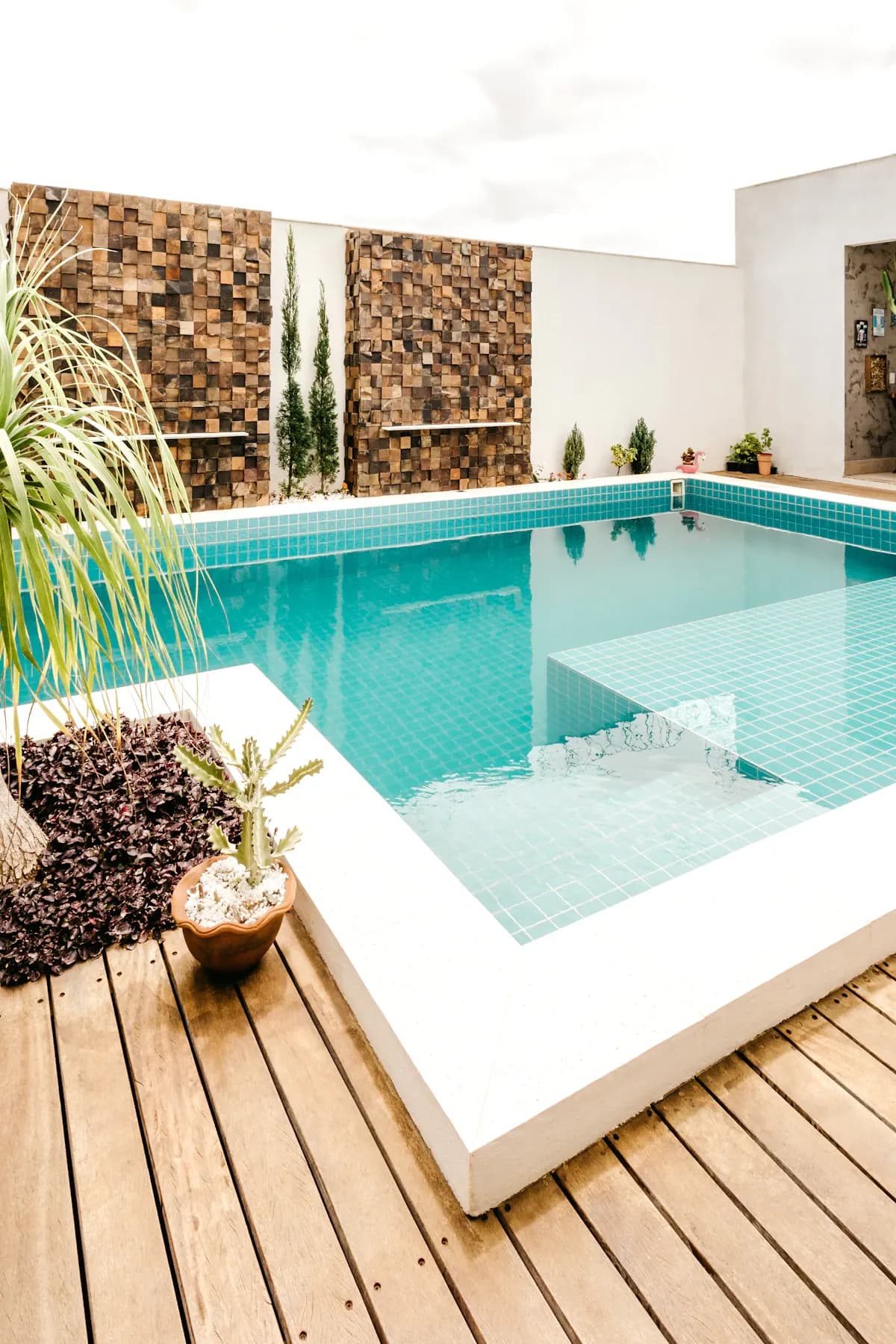
The materials and options guide covers the three shell families, the interior finishes that sit on a concrete shell, deck and coping materials, pumps, heaters, sanitizers and covers. It explains, with our analysis of EIA's finding that 47.7% of pool homes report a variable-speed pump, what each choice does to upfront cost, to the next fifteen years of maintenance, and to the look of the yard, using figures from HomeAdvisor, Thursday Pools, River Pools, Fixr and ENERGY STAR.
If you already have two options in mind, the standalone comparison pages go deeper on a single decision. The gunite versus fiberglass comparison is the one most homeowners need first, followed by the heater and sanitizer comparisons. Each comparison page adds scenarios, ten-year cost thinking and bid questions to the short table on the main comparison tool.
Pools are among the most heavily inspected residential projects, because they combine excavation, structure, electricity near water and a known drowning risk. The CPSC reports 376 per year child drownings in pools and spas from 2021 to 2023, and its 2025 report found 85% of fatal child incidents happen at a residence. Barrier, bonding and drain-cover rules exist because of those numbers.
The permits and codes guide is honest that rules differ by county, city and HOA. It explains the common triggers, the typical inspection sequence from layout through final, what an HOA usually wants to see, and what happens at resale or with an insurer when a pool was built without a permit. It is a map for the conversation with your local building department, not a substitute for it.
The guides are the long-form layer. The service pages describe each scope in detail, the comparison pages settle single decisions, the calculator produces a working number, and the polls show how other planners are answering the same questions. Moving between them is the fastest way to arrive at a scope you can describe in a paragraph, which is the scope builders price most accurately.
When you are ready, the estimate request form asks for the details the guides help you settle: shell preference, spa plans, deck material, access width, and timeline. Written proposals from matched local professionals are free and carry no obligation. Bring the bid questions from the cost guide to every meeting and ask each builder to answer them in writing.
Homeowner polls
No votes yet. Yours will be the first. · saved on this device
No votes yet. Yours will be the first. · saved on this device
Angi's 2026 benchmark for the pool alone is $44,499 to $87,349.
No votes yet. Yours will be the first. · saved on this device
The guides are reviewed when a cited publisher releases a new edition, which for the major cost guides is usually once a year. Each figure names its source and year so you can check whether a newer number exists. If a builder quotes a figure that differs sharply from a cited range, ask which year and region their number reflects before assuming either is wrong.
No. The guides are written as planning material for homeowners and do not promote any builder, manufacturer or dealer. Some figures come from builders and manufacturers that publish cost guides, such as River Pools and Thursday Pools, and those are always named so you can weigh the source. Government data from the EIA, CDC and CPSC is used wherever it exists.
Only in passing. The guides focus on inground pools, in-ground and portable spas, water features and pool decking, because those projects involve excavation, permits and a builder. Above-ground pools share barrier and electrical rules in many jurisdictions, so the permits guide is still useful, but cost and material advice here assumes a permanent inground installation.
Use them to frame a budget and to test proposals, not to replace them. National figures from Angi and HomeAdvisor blend very different markets, and Today's Homeowner shows state ranges that barely overlap. The only number that reflects your soil, access and local labor is a written proposal after a site visit, which is why the guides end by pointing you to estimates.
The permits and codes guide covers barriers, gate hardware, door alarms, safety covers, suction outlet covers and electrical bonding. The materials guide touches on covers as equipment. Because barrier rules are among the most locally amended parts of any code, both guides treat national references as a starting point and recommend confirming details with your building department before the fence is designed.
The spa installation service page covers attached and standalone spas in detail, and the in-ground spa versus portable hot tub comparison page walks through the trade-offs. The cost guide explains how a spa addition changes a pool budget. Adding a spa to an existing pool is closer to a renovation than a new build, so expect a site visit before anyone prices it.
Yes. Use the contact page and describe the question you could not find answered. Topics that come up repeatedly from homeowners, such as sloped lots, high water tables or phased builds, are the ones most likely to become new sections. Suggestions are read as planning questions and are not passed to builders unless you also request an estimate.
 Service guideCustom Pool Design & Build
Custom pool design and build covers everything from the site plan to first swim: excavation, the shell in gunite, fiberglass or vinyl, equipment and plumbing, electrical and bonding, the barrier, startup and training.
 Service guideSpa & Hot Tub Installation
Spa and hot tub installation covers the base, the delivery route, the dedicated electrical circuit with GFCI protection, drainage around the unit, and the cover and access arrangement that make it usable every week.
 Service guideWater Features & Waterfalls
Water features add sound and motion to a pool through sheer descents, bubblers, deck jets, scuppers, spillover spas or rock waterfalls.
 Service guidePool Decking & Coping
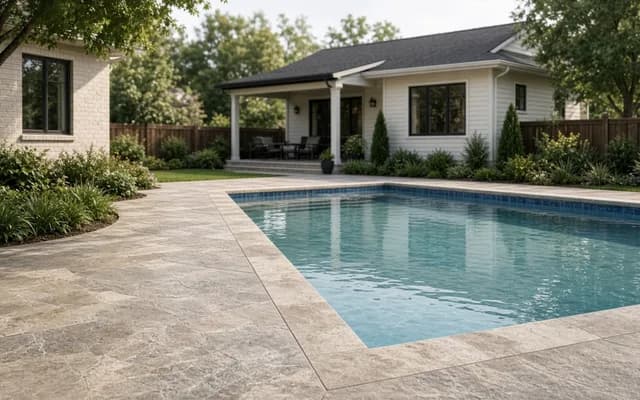
Pool decking and coping form the transition from water to yard: the coping caps the bond beam and the deck carries foot traffic and sheds water.
 Free toolInground pool cost calculator
Size, material tier and complexity in, a realistic budget range out.
 Free toolPool and spa comparisons, decided by your conditions
Side-by-side tables for the decisions that change the price most.
 Free toolPool planning quiz: nine things to know before the first site visit
9 questions that show what you already know and what to check next.
 Free toolPool planning polls
See what other planners chose and add your vote.
Tell us the size, the condition of what is there now, and what you want to change. Pool Plan Compass passes your request to independent local professionals, who reply with written, no-obligation estimates. The service is free to use.