What worries you most about building a pool?
No votes yet. Yours will be the first. · saved on this device
Loading...
About Pool Plan Compass
Pool Plan Compass is an independent planning resource for U.S. homeowners considering an inground pool, a spa, water features or new decking. It publishes sourced costs, timelines and safety data, explains how to compare proposals, and matches homeowners with independent local pool professionals for a free written estimate. It does not build pools, employ crews or rate contractors.
Pool construction is the most expensive backyard project most people will ever commission, and it is bought with less information than a used car. The trade publishes plenty of numbers, but they are scattered across cost guides, manufacturer blogs, federal surveys and industry earnings calls, and each one measures something slightly different. This site pulls them into one place, states what each number actually covers, and links to the source so you can check it.
The second job is matching. When you are ready, the estimate request sends your project brief to independent pool professionals who work in your area. They respond with written proposals; you compare and decide. Nobody here is paid by the builder you choose, and nobody here is going to tell you which builder to choose.
Three kinds of sources. Cost guides from Angi, HomeAdvisor, Fixr, Bob Vila, Today's Homeowner and Concrete Network, which aggregate reported project costs into national ranges. Manufacturer and builder guides from River Pools, Thursday Pools, Pentair and Pool Goods, which are useful for timelines and equipment math but carry a commercial point of view we flag where it matters. And federal and industry data: EIA's 2024 Residential Energy Consumption Survey, CPSC drowning reports, CDC data, ENERGY STAR, Pool Corporation earnings calls and PHTA's Pulse Surveys.
Each statistic on the site carries its source, its year and a link. When a figure is an installed-stock number, such as EIA's finding that 7.25% of U.S. homes have a pool, it is described as stock and not as sales. When a figure comes from a business survey, such as PHTA's Q3 2025 split of 44% vs 37% between pool firms reporting higher and lower new-pool revenue, it is described as a survey of those businesses, not of all households.
The professionals matched through this site are independent businesses. This site does not employ them, does not license or insure them, does not inspect their work and does not rank them. The review guide explains how to evaluate a builder's public record yourself, which is a more reliable method than any badge a directory could award. Verification of licensing, insurance and references is your job and the pro's job to make easy.
In practical terms that means you will never read a testimonial, a star rating, a claim about how many pools anyone has completed, or a promise about price on these pages. You will read sourced ranges, questions to ask, and detail on what fails first. If a proposal you receive makes claims this site would not make, ask for the evidence.
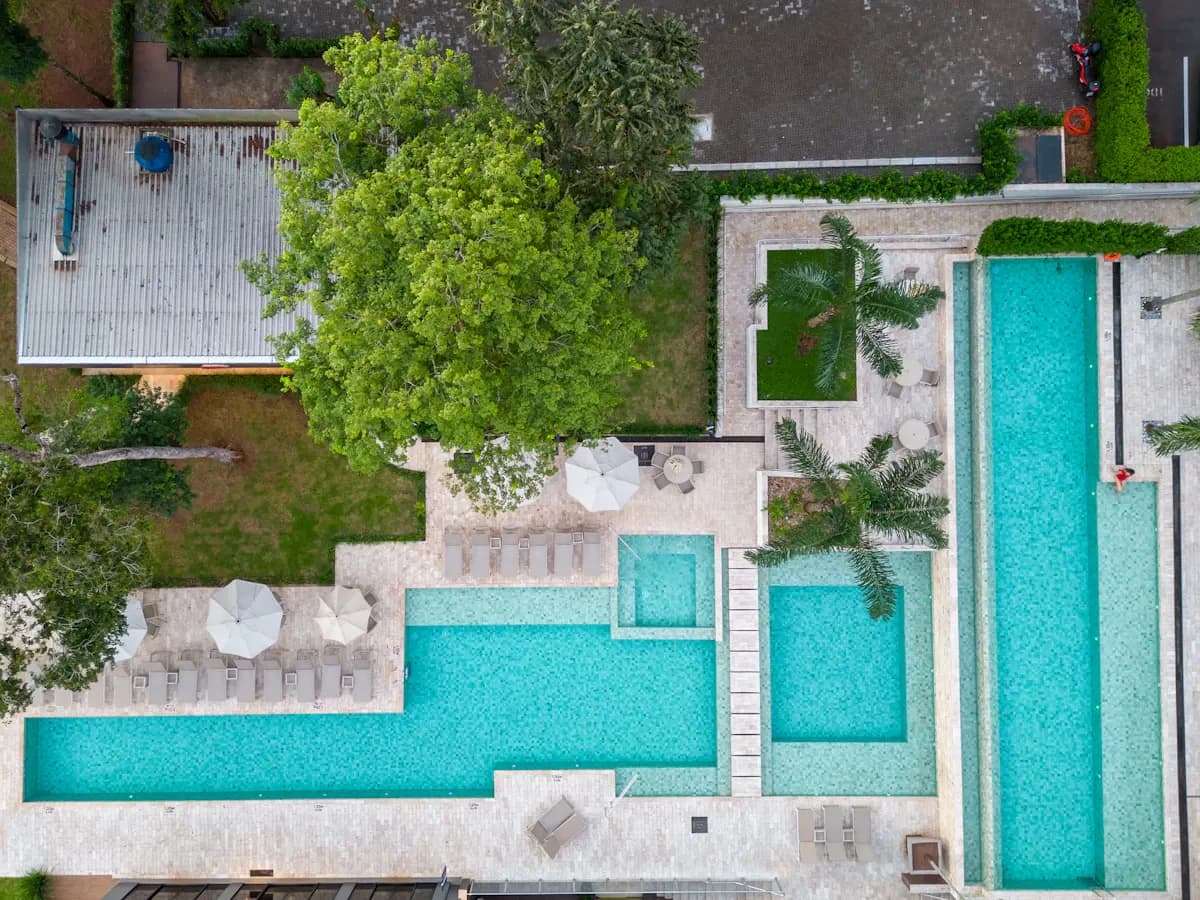
You describe the project: the use you have in mind, the yard, access, any survey or plot plan, and which scopes you want priced. The request goes to independent pool professionals who serve your area and handle that scope. They contact you, usually schedule a site visit, and send a written proposal. You are free to accept one, negotiate, or walk away. There is no fee to you and no obligation at any stage.
The quality of the proposals tracks the quality of the brief, which is why the contact page lists what to include. A brief with a gate width, a photo of the panel and a sentence about how the family will use the water gets a proposal with real excavation and electrical assumptions. A brief that says 'pool, please quote' gets an allowance.
Because that is where budgets break. HomeAdvisor's 2026 guide is explicit that its $41,835 average excludes decking, fencing and landscaping, and River Pools notes owners typically add $25,000 to $50,000 for electrical, patios, fencing and accessories. A shell price is a starting point; a site plan with the deck, the barrier, the equipment pad and the drainage drawn is a budget.
The same logic applies to operating cost. A pool that HomeAdvisor says costs $960–$1,800 per year a year to maintain is a different purchase from one with a variable-speed pump, a cover and a heat pump that costs half that. Our analysis of EIA's 2024 household survey found only 47.7% of pool homes report a variable-speed pump and 60.06% report an unheated pool, so existing pools span both kinds of purchase. The planning tools on this site are built to surface those choices before the deposit, not after.
Cost guides are updated by their publishers on their own schedules, most annually. When a source updates, the figure and year on this site are updated with it, and the older figure is retired rather than averaged. Federal survey data such as EIA's RECS arrives every few years and is labeled by survey year; our own tabulations of it, such as the finding that 69.1% of hot-tub homes report no pool, are re-run when a new release lands. Industry data from earnings calls and PHTA surveys is quarterly and is used for market direction, not for pricing.
If a number here conflicts with a proposal you received, the proposal is more specific to your yard and the number here is a national reference. Use the reference to ask why the proposal differs, not to argue that it should not.

 Service guideCustom Pool Design & Build
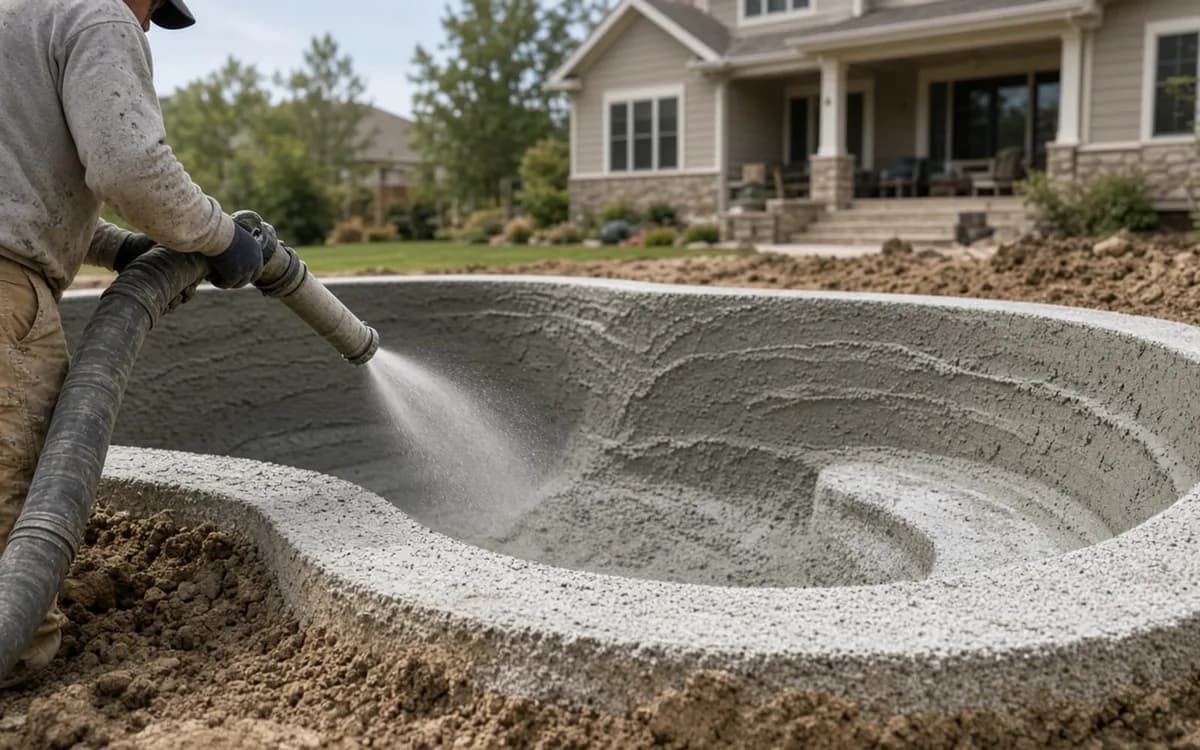
Custom pool design and build covers everything from the site plan to first swim: excavation, the shell in gunite, fiberglass or vinyl, equipment and plumbing, electrical and bonding, the barrier, startup and training.
 Service guideSpa & Hot Tub Installation
Spa and hot tub installation covers the base, the delivery route, the dedicated electrical circuit with GFCI protection, drainage around the unit, and the cover and access arrangement that make it usable every week.
 Service guideWater Features & Waterfalls
Water features add sound and motion to a pool through sheer descents, bubblers, deck jets, scuppers, spillover spas or rock waterfalls.
 Service guidePool Decking & Coping
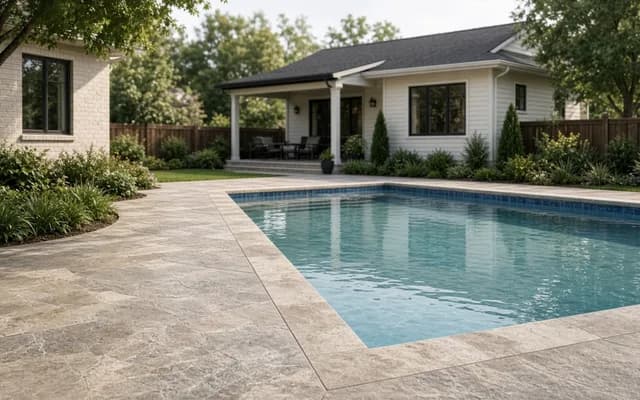
Pool decking and coping form the transition from water to yard: the coping caps the bond beam and the deck carries foot traffic and sheds water.
Homeowner polls
No votes yet. Yours will be the first. · saved on this device
No. It is a planning resource and a matching service. It does not design, build, install or service pools or spas, and it does not employ the professionals who respond to estimate requests. Those are independent businesses that you contract with directly, on their terms and yours.
No. Requesting proposals through the site is free to the homeowner, and there is no obligation to hire anyone who responds. Matched professionals may charge for detailed design work or engineering after an initial visit, which they should disclose before doing it.
By service area and scope: a request for an inground pool goes to pool builders who work in your area; a request for a portable hot tub goes to spa dealers and electricians. The site does not rank or endorse them. Verifying licensing, insurance and references is described in the review guide and is something you should do for every bidder.
Use them to ask questions, not to set the price. National ranges from Angi or HomeAdvisor tell you the order of magnitude; your soil, access, region and finish choices set the number. If a proposal is far outside the range, ask what in your yard accounts for the difference. A good builder can explain it line by line.
Because manufacturers publish useful data on timelines, equipment energy use and installation requirements that cost guides do not. Where a source has a commercial interest, such as a fiberglass builder comparing fiberglass with concrete, the site says so and pairs it with a neutral source when one exists.
The planning principles apply, but the cost data, timelines and services here are for inground pools, spas, water features and decking. Above-ground pools have different barrier rules and a much lower cost structure, and a general pool-building cost guide is a poor reference for them.
Use the contact page and cite the page and the figure. Every statistic carries a source link, so if the source has changed or you believe it was misread, say which. Corrections are made against the source, not against a competing claim without one.
 LocationsRegional planning notes
How climate, codes and prices change a project across U.S. regions.
 ArticlesPlanning articles
Cost guides, checklists and mistakes to avoid before you sign.
 ReviewsHow to read reviews
What genuine contractor reviews look like and what they leave out.
Tell us the size, the condition of what is there now, and what you want to change. Pool Plan Compass passes your request to independent local professionals, who reply with written, no-obligation estimates. The service is free to use.