What matters most when choosing a builder?
No votes yet. Yours will be the first. · saved on this device
Loading...
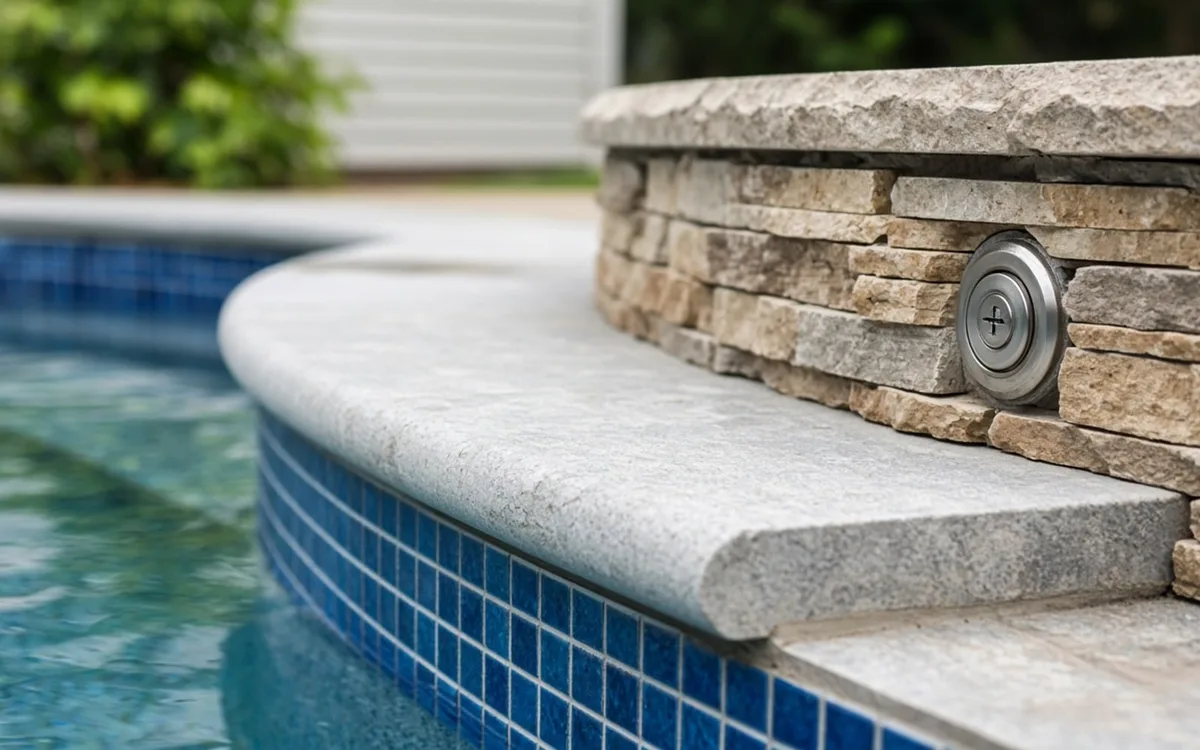
Pool Plan Compass · Glossary
This glossary defines the pool and spa construction terms that appear most often in proposals, permit documents and inspection reports. Knowing words like bond beam, coping, expansion joint, equipotential bonding and barrier helps you compare bids, ask better questions and spot missing items. Each definition is short and written for homeowners rather than builders.
Pool proposals are written in the language of the trade. A bid that lists a bond beam, cantilever coping, a hydrostatic relief valve and a spillover spa may be describing exactly what you want, or it may be leaving something important out. Understanding the terms lets you tell the difference.
The definitions below cover the terms most likely to appear in proposals and permits. This page explains how to use them when reading bids, which terms are often confused, and which questions they unlock. The cost guide shows how many of these items affect price. Use both pages together when you sit down with a stack of proposals.
Read each proposal with the glossary open and highlight every technical term. Then check that each term has a specification: a material, a size, a model number or a quantity. A proposal that mentions a bond beam without steel or dimensions, or coping without a material, leaves room for different interpretations.
Compare the terms across proposals. If one builder lists an expansion joint and another does not, ask whether it is included. If one mentions a hydrostatic relief valve and another does not, ask whether your site needs one. Missing terms are often the source of later change orders. The design-build page lists what a complete proposal usually contains.
Gunite and shotcrete are two ways to spray concrete; both produce similar shells and are usually priced together. Coping and decking are different: coping caps the pool edge, while the deck is the surrounding surface. Bonding and grounding are also different: bonding ties metal parts to the same electrical potential, while grounding connects the electrical system to the earth.
A spillover spa and a standalone spa are also easy to confuse. A spillover spa shares the pool's equipment and overflows into it, while a standalone spa has its own system. Standalone is the norm for hot tubs: our analysis of EIA's 2024 household survey found 69.1% of hot-tub homes report no pool, and only 2.1% of homes have both. A barrier is not only a fence; in code terms, it can include walls, doors with alarms and approved safety covers.
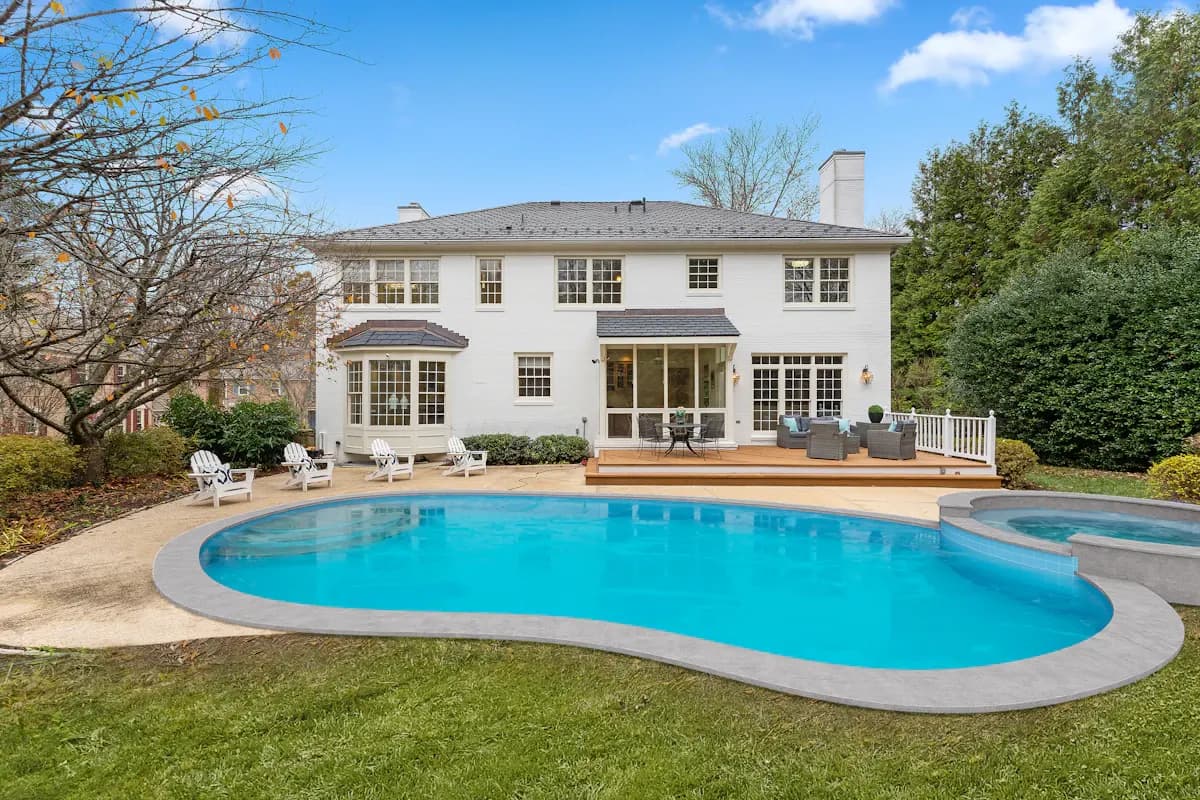
Knowing the terms lets you ask precise questions. How thick is the bond beam, and how is it reinforced? What type of coping is included, and how is it attached? Where are the expansion joints, and what sealant is used? Is a hydrostatic relief valve included, and does the site need one?
Electrical questions are just as important. How is equipotential bonding installed, and when is it inspected? What GFCI protection is provided? For barriers, ask what height, gate hardware and door alarms are included; CPSC found 85% of fatal child drownings happen at a residence, and Fixr prices a pool fence at $6,500 on average. The permits guide explains which of these items inspectors check. Written answers make later disputes easier to resolve.
Some terms point to parts of the pool that need ongoing care. Expansion joints need resealing every few years. Salt chlorine generators need cell cleaning and eventual replacement. Variable-speed pumps need programming to save energy; Pentair cites savings of up to 90%, yet our analysis of EIA's 2024 survey found 48.2% of pool homes still report no variable-speed pump. Coping and waterline tile need inspection for cracks. Knowing the term makes it easier to describe a problem to a service company.
Understanding these terms helps you plan maintenance budgets and spot problems early. The decking and coping page explains joint and coping maintenance, and the saltwater comparison covers salt cell care. Keep a list of maintenance items with the pool manual so they are not forgotten between seasons, and review it each spring before the pool opens for the year.
Homeowner polls
No votes yet. Yours will be the first. · saved on this device
No votes yet. Yours will be the first. · saved on this device
Pool construction involves structural, plumbing, electrical and finishing trades, each with its own vocabulary. Proposals use these terms to specify work precisely. Knowing the terms helps you understand exactly what is included and compare bids fairly. If a term is unclear, ask the builder to explain it in writing.
They are closely related. Gunite uses a dry concrete mix with water added at the nozzle, while shotcrete uses a pre-mixed wet concrete. Both create strong pool shells, and builders often use the terms interchangeably. What matters more is the shell thickness, steel reinforcement and quality of application.
A skimmer draws water from the surface to remove floating debris, while a main drain draws water from the bottom of the pool. Both feed the pump and filter. Main drains must meet anti-entrapment requirements. Some modern designs reduce or eliminate main drains, relying on skimmers and other suction outlets.
Turnover rate is how long it takes the pump and filter to circulate the pool's full volume once. It helps determine pump and filter sizing. Variable-speed pumps can achieve turnover at low speed over longer periods, saving energy. Ask the builder what turnover rate the system is designed for.
A weir can mean two things. In a skimmer, it is the flap that lets surface water in while keeping debris from floating back out. In a spillover spa or infinity edge, it is the edge water flows over. Proposals usually make the meaning clear from context.
The equipment pad is a level base, usually concrete, where the pump, filter, heater, sanitizer, controls and valves sit. It should be placed for service access, airflow, noise control and reasonable distance from the pool. Proposals should show the pad location and list every piece of equipment on it. Not every pad has a heater: our analysis of EIA's 2024 survey found 35.8% of pool homes report a heating fuel.
The glossary covers the terms most likely to appear in proposals and permits. For more specialized terms, ask the builder, check manufacturer documentation or consult your local building department. The service pages and guides on this site also explain terms in context as they come up.
 Service guideCustom Pool Design & Build
Custom pool design and build covers everything from the site plan to first swim: excavation, the shell in gunite, fiberglass or vinyl, equipment and plumbing, electrical and bonding, the barrier, startup and training.
 Service guideSpa & Hot Tub Installation
Spa and hot tub installation covers the base, the delivery route, the dedicated electrical circuit with GFCI protection, drainage around the unit, and the cover and access arrangement that make it usable every week.
 Service guideWater Features & Waterfalls
Water features add sound and motion to a pool through sheer descents, bubblers, deck jets, scuppers, spillover spas or rock waterfalls.
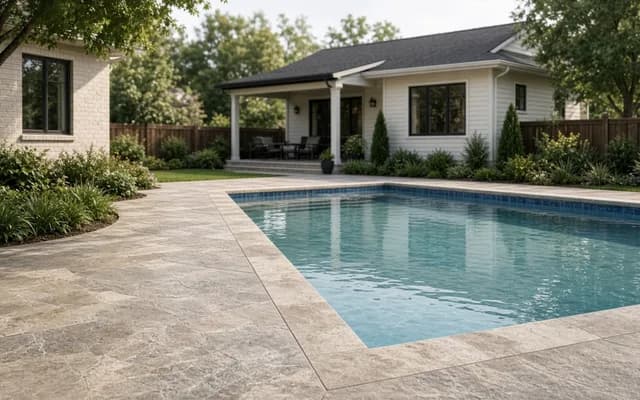 Service guidePool Decking & Coping
Pool decking and coping form the transition from water to yard: the coping caps the bond beam and the deck carries foot traffic and sheds water.
 Free toolInground pool cost calculator
Size, material tier and complexity in, a realistic budget range out.
 Free toolPool and spa comparisons, decided by your conditions
Side-by-side tables for the decisions that change the price most.
 Free toolPool planning quiz: nine things to know before the first site visit
9 questions that show what you already know and what to check next.
 Free toolPool planning polls
See what other planners chose and add your vote.
Tell us the size, the condition of what is there now, and what you want to change. Pool Plan Compass passes your request to independent local professionals, who reply with written, no-obligation estimates. The service is free to use.