What worries you most about building a pool?
No votes yet. Yours will be the first. · saved on this device
Loading...
Pool Plan Compass · Reviews
A pool builder's public record is worth more than any rating. Look for reviews that describe the schedule, the change orders and the warranty response, check the state license and insurance certificate yourself, and pull the builder's permit history at the county. This site does not rate or rank builders; it shows you how to evaluate them.
A pool is a months-long relationship with a contractor, and the failure points are rarely craftsmanship. They are schedule slippage, change orders for site conditions that should have been priced, plaster or gelcoat issues in year two, and a warranty call that goes unanswered. Good reviews describe those things. Bad reviews, and bad five-star reviews, describe how nice the salesperson was.
PHTA's Q3 2025 Pulse Survey found 70% of pool firms naming economic factors as their top challenge and margins flat, which is the environment in which under-capitalized builders take deposits to fund the previous job. Verifying that a builder is solvent and licensed is not paranoia; it is the same diligence a bank would apply to a loan of this size.
It names the scope and the shell type, gives the start and finish dates, and says whether the schedule held. It says whether there were change orders, what they were for, and whether they were explained before or after the work. It mentions the startup: was plaster brushed, were the owners trained, did the automation work on day one. And it says something about year two, which is when plaster mottling, tile pops and leaks show up.
A review that mentions a problem and how it was resolved is more valuable than one with no problems, because every pool build has a problem. The builder who called back, sent a crew and fixed the coping joint is the one you want. HomeAdvisor puts each seasonal opening or closing at $150 to $300; reviews from owners who pay for that service tend to be detailed about follow-up.
Homeowner polls
No votes yet. Yours will be the first. · saved on this device
No votes yet. Yours will be the first. · saved on this device
 Service guideCustom Pool Design & Build
Custom pool design and build covers everything from the site plan to first swim: excavation, the shell in gunite, fiberglass or vinyl, equipment and plumbing, electrical and bonding, the barrier, startup and training.
 Service guideSpa & Hot Tub Installation
Spa and hot tub installation covers the base, the delivery route, the dedicated electrical circuit with GFCI protection, drainage around the unit, and the cover and access arrangement that make it usable every week.
 Service guideWater Features & Waterfalls
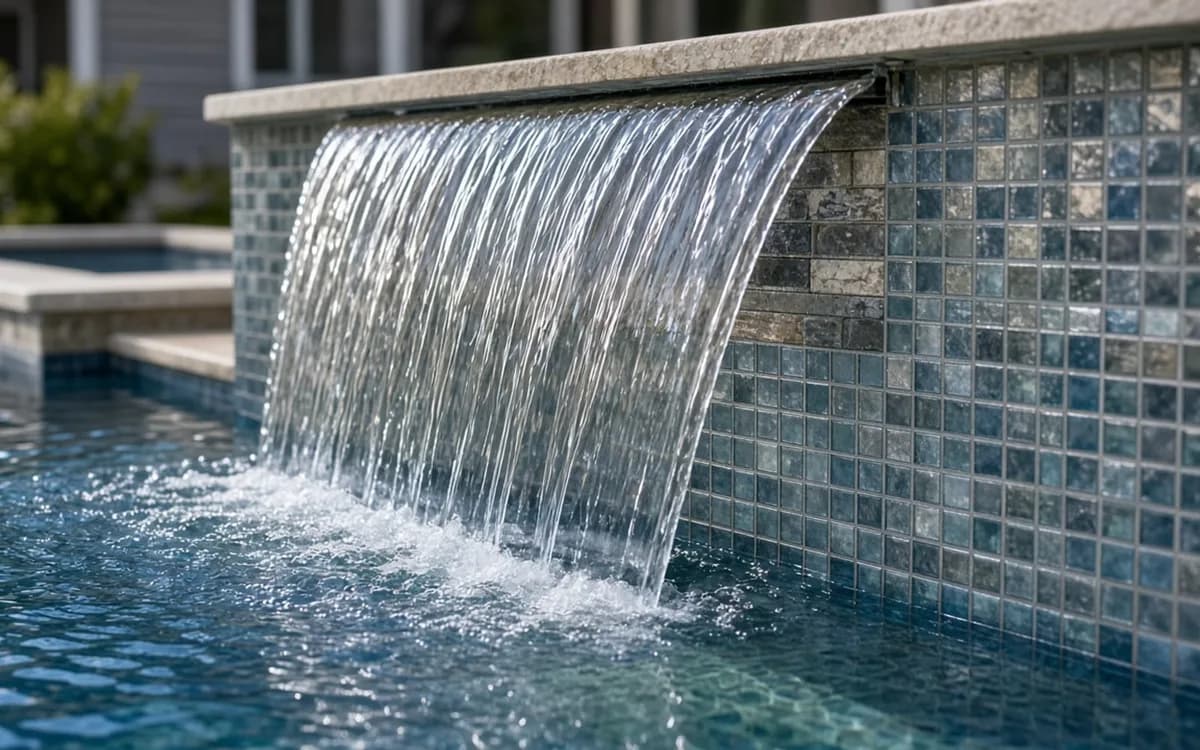
Water features add sound and motion to a pool through sheer descents, bubblers, deck jets, scuppers, spillover spas or rock waterfalls.
Tell us the size, the condition of what is there now, and what you want to change. Pool Plan Compass passes your request to independent local professionals, who reply with written, no-obligation estimates. The service is free to use.
Most states license pool contractors under a specific classification, and the licensing board's website shows status, bond, complaints and disciplinary history by license number. Ask for the number and look it up yourself rather than accepting a photocopy. Ask for a certificate of insurance naming you as certificate holder, sent directly from the insurer, showing general liability and workers' compensation with current dates.
Then go to the county building department and search permits by the builder's name. You will see how many pools they permitted in the past two years, whether inspections passed, and whether any permits were left open, which is a sign of jobs that stalled. HomeAdvisor's timeline puts permits at 2–6 weeks, and a builder with a clean permit record moves through that window faster.

A deposit larger than what the state allows or than the first milestone justifies. A schedule with no dates. Excavation listed as included with no unit prices for rock or haul-off. Equipment listed by brand with no model numbers. Barrier, electrical or startup missing or shown as allowances. A warranty that is verbal or that names only the manufacturer. Pressure to sign today to hold a price.
The safety numbers make this concrete. CPSC's June 2026 report counted 376 per year, and CDC data puts national drowning deaths at 4,345 per year. A builder who treats the barrier as your problem after the pool is done is a builder who will treat the final inspection the same way. The estimate request page lists what a complete proposal contains.
For a portable hot tub the risk is service, not construction. Useful reviews describe a warranty claim on a pump or a heater: how long the dealer took, whether there was a trip charge, whether the part was in stock. Fixr's 2025 guide gives hot tubs a 5 to 20 year lifespan depending on build quality, and the dealer's service record is what decides where in that range yours lands. HomeAdvisor's 2026 hot tub guide puts maintenance at $500 to $1,000 a year and electricity at $20 to $30 a month, which makes a dealer's repair record worth checking. Ask whether the dealer has in-house technicians or contracts service out.
For water features and decking, look for reviews that mention the joint, the drainage and the year-two condition. A deck that looked beautiful on completion and heaved by spring is a review you want to find before you hire. The decking page explains the joint detail that reviews should mention.
Reviews tell you how a builder behaves; the proposal tells you what they promised. Read reviews first to shortlist three bidders, then compare proposals on scope as described throughout this site, then call two references from each finalist and ask the year-two questions. Only then compare price. HomeAdvisor puts the average inground pool at $41,835 before decking, fencing and landscaping; ask references whether the cheaper option held up. Homeowners who start with price usually end with a change order for the barrier.
Opendoor's 2026 analysis says owners recoup 40–60% of a pool's cost at resale, which means the other half is paid back in use. A builder who gets the schedule, the equipment and the handover right is the one who delivers that half. See the planning polls for what other homeowners say mattered most after the build.
Only as a starting filter. Ratings cluster at five stars because they are solicited at completion, before year-two problems appear. Read the text, look for reviews 18 months or older, and weight the ones that describe schedule, change orders and warranty response. A builder with a few detailed three-star reviews describing fixed problems is often a safer bet than one with only short five-star ones.
Some states cap contractor deposits by law; where they do not, 10% at signing is a common figure with the balance tied to milestones such as excavation, shotcrete, deck and plaster. A deposit of a third or more before any work is a warning sign, particularly from a builder whose reviews mention delays between phases.
Search the county permit portal by the builder's name for permits without a final inspection, and ask the builder directly how many pools are in progress and how many crews they run. Ask references whether the crew disappeared for weeks between phases. A builder juggling too many open jobs is the most common source of six-month builds that were quoted at three.
Hire the one whose warranty you can read and whose reviews show it being honored. A lifetime structural warranty from a company that may not exist in ten years is worth less than a five-year warranty from a builder with a twenty-year permit history. Ask what the warranty excludes: plaster discoloration, ground movement and equipment are common exclusions.
Yes, and a confident builder will offer. Look at the coping joint, the tile line at the waterline, the deck for cracks and heave, the equipment pad for tidiness, and ask the owner about response to any call. A brand new pool tells you about the crew's finishing; a two-year-old pool tells you about the design.
New businesses exist, and some are run by experienced foremen who left a larger builder. Verify the license and insurance, ask which company the principals worked for before, and check that company's record. Ask for references from their previous employer's projects they personally ran. Weight the written proposal and the permit record more heavily.
No. It matches your request to independent professionals in your area and shows you how to evaluate them. It does not publish ratings, testimonials or rankings, and it does not receive payment from the builder you hire. The evaluation is yours to do, and this page is the method.
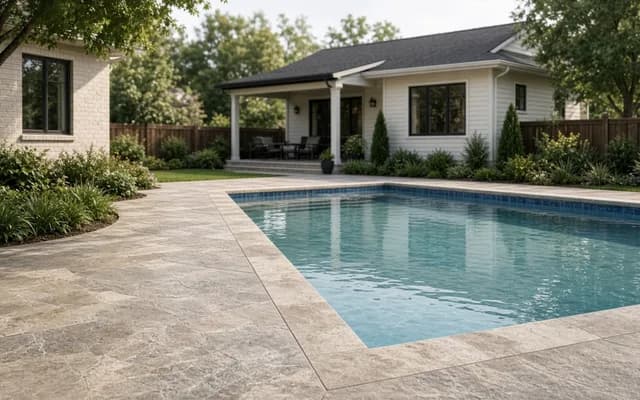
Pool decking and coping form the transition from water to yard: the coping caps the bond beam and the deck carries foot traffic and sheds water.