If you want a spa, which type fits your plan?
No votes yet. Yours will be the first. · saved on this device
Loading...
Pool Plan Compass · Service guide
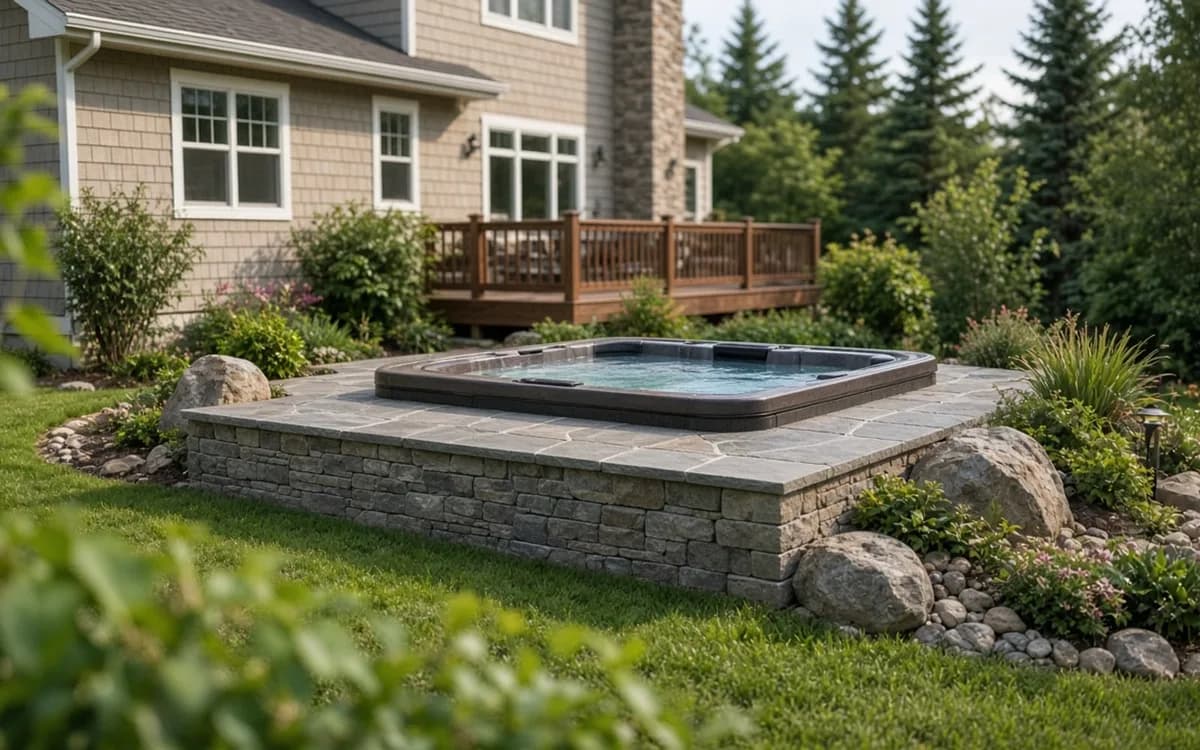
Spa and hot tub installation covers the base, the delivery route, the dedicated electrical circuit with GFCI protection, drainage around the unit, and the cover and access arrangement that make it usable every week. It suits households that want year-round soaking in a small footprint. The unit price is the smaller half of the decision; the site work decides whether it goes smoothly.
A hot tub is the one backyard water project that is used more in January than in July. EIA's 2024 Residential Energy Consumption Survey found 7.61% of occupied U.S. homes have a hot tub, more than the share with a pool, and in the West that figure rises to 10.5%. These are installed-stock numbers, and our analysis of the same survey found 69.1% of hot-tub homes report no swimming pool, with just 2.1% of all homes owning both. The spa is mostly a standalone purchase, not a pool accessory.
HomeAdvisor's 2026 guide puts a new hot tub at $6,000 installed, while an in-ground spa averages $15,000. Between those two lies the swim spa, which Fixr prices at $15,000 to $40,000. This page covers what each option needs from the site, what the electrical work costs, and how to keep the delivery day from becoming a crane rental.
Want the numbers only? Read the spa & hot tub installation cost guide for 2026 ranges, what moves the price, and sample budgets.
| Item | Low | High | Unit | Notes |
|---|---|---|---|---|
| Portable hot tub, unit and delivery | $2,000 | $11,000 | flat | HomeAdvisor 2026; luxury units higher |
| In-ground spa, installed | $5,000 | $25,000 | flat | Custom units can exceed $35,000 |
| Swim spa | $15,000 | $40,000 | flat | Fixr 2025 |
| Electrical circuit and disconnect | $600 | $2,200 | flat | Plus subpanel $400 to $1,800 if needed |
| Concrete pad | $2 | $6 | per sq ft | 100 to 120 sq ft typical |
| Crane delivery | $800 | $1,500 | flat | When the path is blocked |
| Permit | $100 | $250 | flat | Electrical permit; barrier rules vary |
A portable acrylic hot tub is a self-contained appliance: shell, cabinet, pump, heater and controls in one box that sits on a pad and plugs into a dedicated circuit. HomeAdvisor's 2026 tiering runs entry-level $2,500 to $5,000, value $5,000 to $8,000, premium $8,000 to $11,000 and luxury above $11,000. An in-ground spa is a small pool, built in gunite or set as a fiberglass shell, with equipment on a separate pad. A swim spa is a long portable unit with a current generator, sized for exercise.
Choose by use and by site. Two adults soaking after work in a 12 by 12 foot patio corner want a portable unit. A pool project that wants a raised spillover spa built into the design wants gunite, priced as an add-on to the custom pool build at HomeAdvisor's $2,000–$35,000. A lap swimmer with no room for a pool wants a swim spa and should budget for its weight: a filled 16-foot unit can exceed 20,000 pounds.
| Option | Installed range | Site needs | Source |
|---|---|---|---|
| Portable hot tub | $2,000 to $11,000 (avg $6,000) | Level pad, 50-amp GFCI circuit, cover access | HomeAdvisor 2026 |
| In-ground spa | $5,000 to $25,000 (avg $15,000) | Excavation ~$2,000, equipment pad, barrier | HomeAdvisor 2026 |
| Swim spa | $15,000 to $40,000 | Engineered slab, crane delivery, 60-amp+ circuit | Fixr 2025 |
| Attached spillover spa on new pool | $2,000 to $35,000 | Shares pool equipment, larger heater | HomeAdvisor 2026 |
A filled 7-foot hot tub with four people weighs 4,000 to 6,000 pounds spread over about 50 square feet. That is more than most decks were framed for and enough to tilt a pad of loose pavers within a season. HomeAdvisor's 2026 installation guide prices a concrete pad at $2 to $6 per square foot for a 100 to 120 square foot slab, which is the standard answer: a 4-inch reinforced slab, level within a quarter inch, with room around the cabinet to open access panels.
The failure modes are predictable. A pad that is not level stresses the acrylic shell and makes the water line run uneven. A deck without added posts and beams sags and the cabinet door binds. A unit placed against a wall with the equipment bay facing the wall cannot be serviced without moving it. Ask the pro you hire to confirm the pad size against the manufacturer's spec sheet and to leave at least 24 inches of clearance on the service side.
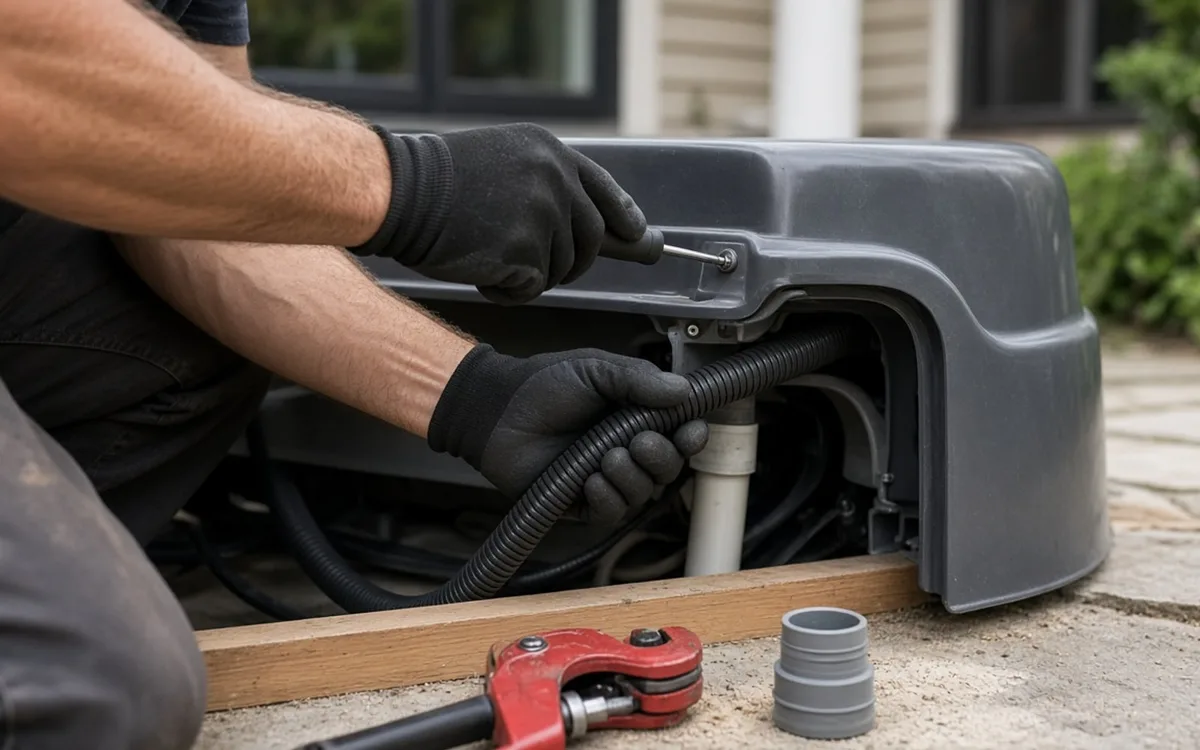
Most full-size hot tubs need a dedicated 240-volt, 50-amp circuit with a GFCI disconnect within sight of the tub but at least five feet away, run in conduit from the panel. HomeAdvisor's 2026 guide puts install labor at $2,300, with a new subpanel at $400 to $1,800 if the main panel lacks capacity, and permits at $100 to $250. A long run from a panel on the far side of the house is what pushes wiring to the top of that range.
Electric heating is the norm. EIA's 2024 survey found 52.7% of hot-tub homes heat the tub with electricity, rising to 60% in the Northeast. HomeAdvisor estimates $20 to $30 a month in electricity for a well-insulated unit with a good cover, and Fixr puts operating cost at $25 to $50 a month. A cheap cover that soaks up water is the fastest way to double that number, so treat the cover and a cover lifter as part of the install, not accessories.
A portable spa travels on its side on a dolly through a gate at least 38 to 42 inches wide, over ground firm enough not to sink, with no steps it cannot be ramped over. Measure the gate, the path width at its narrowest point, and any overhead obstruction. When the path fails, HomeAdvisor prices a crane at $800 to $1,500, which is cheaper than removing a fence section and rebuilding it in many cases.
Swim spas almost always need a crane or a forklift because they are 12 to 20 feet long and cannot be tipped on their side. Plan the delivery date with the crane company's reach chart in hand: overhead lines, a two-story roof between the street and the pad, or a soft lawn that cannot support outriggers each change the plan. Confirm in writing who is responsible if the unit is damaged during placement.
CPSC's June 2026 report counted 376 per year in pools and spas, and spas carry an additional risk of drain entrapment that the Virginia Graeme Baker Act addressed with compliant covers. For a residential portable unit the practical requirements are a lockable ASTM-rated safety cover, a GFCI-protected circuit, and in many jurisdictions the same barrier rule that applies to pools unless the locking cover is accepted as the barrier.
Water temperature is the other safety line. Manufacturers cap at 104 degrees Fahrenheit, and pediatric guidance keeps young children out of hot water for more than brief periods. Place the unit where it is visible from the house, keep the cover locked when not in use, and if there is a pool nearby, coordinate the fence so one gate does not become the weak link for both.
HomeAdvisor's 2026 guide budgets $500 to $1,000 a year in maintenance and $20 to $30 a month in electricity. Fixr's 2025 guide prices swim spas at $15,000–$40,000 and gives hot tubs a lifespan of 5 to 20 years depending on build quality. Upkeep weighs on budgets: Fixr's 2025 guide puts a hot tub's operating costs at $25 to $50 a month, before any repairs. What wears first is the cover, then the circulation pump seals, then the heater element if water chemistry has been neglected. The acrylic shell and the cabinet outlast all of them on a well-built unit.
EIA's 2024 survey found only 30.0% of hot-tub homes use the tub all twelve months nationally, though the Northeast reaches 42%. A tub that sits unused still costs money to keep hot, so decide honestly whether you will drain it for summer. Draining and refilling every three to four months is the standard chemistry reset regardless.
Separate the unit from the site work. The dealer quotes the spa, the cover, the lifter and delivery; the electrician quotes the circuit, the disconnect, the subpanel if needed and the permit; a concrete contractor or the dealer's crew quotes the pad. Some dealers bundle all three, which is convenient but hides the electrical line. Ask for each as its own number so you can see whether a $9,000 package is a $6,000 spa with $3,000 of site work or the reverse.
For an in-ground spa, compare it exactly as you would a small pool: excavation assumptions, shell type, equipment by model, barrier and inspection responsibility. The cost calculator handles the attached-spa case as an add-on to a pool build, and the estimate request lets you describe the pad location and panel capacity so the responding pros can price the circuit realistically.
Pool Plan Compass ran these numbers on the federal government's own household data. You won't find them in a contractor's brochure.
Pool Plan Compass analysis · 2024
95% interval 65.6%–72.6% · about 6.3 million homes · 1,222 survey households
Most hot tubs sit on their own, not beside a pool. A stand-alone spa pad with its own electrical run is the common project, and it doesn't need to be priced as a pool package.
Source: Pool Plan Compass analysis of 2024 federal household survey data from the U.S. Energy Information Administration. How we calculated it
Homeowner polls
No votes yet. Yours will be the first. · saved on this device
No votes yet. Yours will be the first. · saved on this device
 Service guideCustom Pool Design & Build
Custom pool design and build covers everything from the site plan to first swim: excavation, the shell in gunite, fiberglass or vinyl, equipment and plumbing, electrical and bonding, the barrier, startup and training.
 Service guidePool Decking & Coping
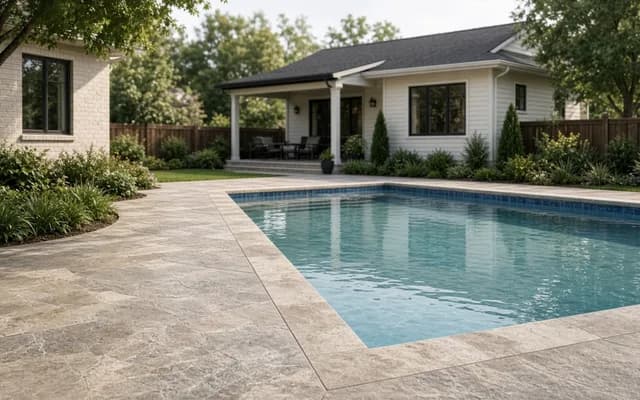
Pool decking and coping form the transition from water to yard: the coping caps the bond beam and the deck carries foot traffic and sheds water.
Only if the deck was framed for it or is reinforced. A filled tub with bathers can exceed 100 pounds per square foot, while most residential decks are designed for 40 to 60. A pro will typically add a beam and posts on footings directly under the tub or cut the deck and set the tub on a slab below it so the rim sits at deck level. Ask for the load calculation in the proposal.
For a small two-person unit in a mild climate, sometimes. They heat slowly, cannot run the heater and jets at the same time, and cost more per month to keep warm in winter. If you have a panel with capacity, the 240-volt circuit is usually the better long-term spend because it opens up every full-size model. Either way the outlet or disconnect must be GFCI protected.
Close enough to walk to barefoot in February, far enough that the disconnect can be five feet from the water and that steam does not hit siding or windows. Many owners place it 10 to 20 feet from a door with a lit path. Check setbacks: some cities treat a spa as a structure with property-line distance rules, and the electrical code sets clearances from overhead lines.
An engineered slab, because a filled swim spa can weigh 15,000 to 25,000 pounds; usually a 60-amp or larger circuit; crane or forklift delivery; and more thought about where the cover goes when open, since a 16-foot cover is not lifted by hand. Fixr prices swim spas at $15,000 to $40,000 before those site items, so the slab and crane are a meaningful share of the total.
It softens the water and reduces chlorine handling, but the cell has a limited life and hot water shortens it. Many owners find a well-managed bromine or chlorine routine with a good cover and regular water changes works fine. If you do want salt, confirm the manufacturer supports it, because some acrylic and heater warranties exclude salt systems.
Every three to four months for a typical household, sooner with heavy use. The rule of thumb many dealers use is gallons divided by three, divided by daily bathers, equals days between changes. Draining is also when you inspect the cover, clean the filter thoroughly and check the cabinet for leaks. Water goes to a lawn or drain that can take a few hundred gallons of chlorinated water.
If you are building a pool, attached is usually cheaper because it shares the pump, filter and heater, and the spillover doubles as a water feature. If the pool exists, a separate portable unit avoids tying into old plumbing and lets you run the spa hot in winter without heating the pool. An in-ground spa added to an existing pool is the most expensive route and needs its own equipment or a valve rework.
Ask what is covered on the shell, the cabinet, the plumbing and the equipment, how many years each carries, and whether site conditions like an unlevel pad void it. Ask who performs warranty service, whether there is a trip charge, and whether using a non-dealer electrician or salt system affects coverage. Get the answers in the written proposal rather than on a brochure.
 Free toolInground pool cost calculator
Size, material tier and complexity in, a realistic budget range out.
 Free toolPool and spa comparisons, decided by your conditions
Side-by-side tables for the decisions that change the price most.
 Free toolPool planning quiz: nine things to know before the first site visit
9 questions that show what you already know and what to check next.
 Free toolPool planning polls
See what other planners chose and add your vote.
Tell us the size, the condition of what is there now, and what you want to change. Pool Plan Compass passes your request to independent local professionals, who reply with written, no-obligation estimates. The service is free to use.