What is the primary use for the water?
Drives size, depth, heating and whether a spa is the better project.
No votes yet. Yours will be the first. · saved on this device
Loading...
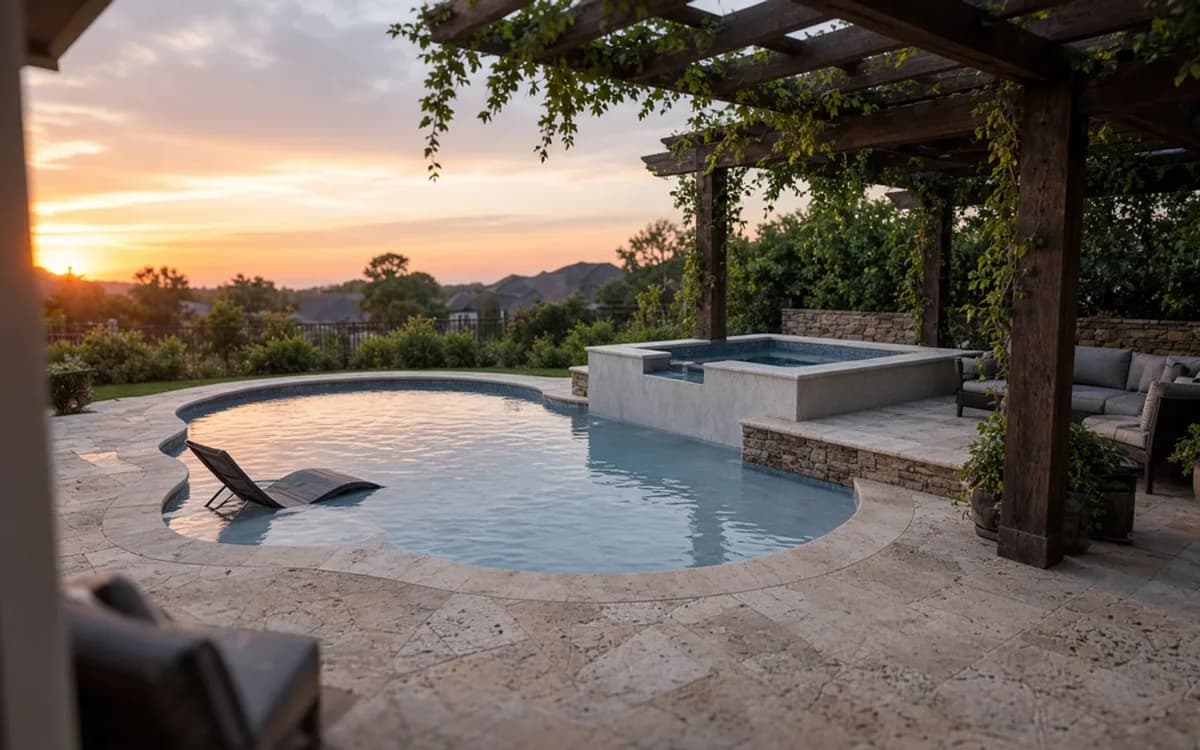
Plan the pool you want to swim in—and maintain.
Pool Plan Compass is a planning resource for U.S. homeowners weighing a new inground pool, an attached or standalone spa, water features, and the decking and coping that tie them together. It lays out sourced costs, timelines, energy and safety numbers, then matches you with independent local pool professionals for a free written estimate with no obligation to hire.
By the numbers
Every figure links to its published source.
$65,909
Typical U.S. inground pool costs $65,909, with most projects $44,499 to $87,349
Angi's cost guide, updated August 2026, is the benchmark behind this site's calculator. It is an inground pool reference, not a spa-only or water-feature price, and decking, barriers, excavation assumptions and landscaping must be confirmed in the proposal.
Angi, How Much Does It Cost to Install a Pool (2026)$65,000–$120,000
Gunite $65k–$120k, fiberglass $25k–$60k, vinyl $20k–$40k installed
HomeAdvisor's 2026 material breakdown shows concrete costs two to three times a vinyl-liner pool up front. Concrete buys unlimited shape freedom; fiberglass and vinyl buy lower cost and faster installation.
HomeAdvisor, How Much Does It Cost to Build a Pool (2026)$180–$350 per sq ft
Whole inground pool projects run $180–$350 per sq ft of pool; a 12x24 pool costs $38k–$100k
This Old House's guide (updated June 6, 2025) divides total project cost by pool area: vinyl $130–$240, fiberglass $175–$330 and concrete $200–$350 per sq ft. That includes fixed costs such as equipment, permits and mobilization, which is why it runs well above pool-only per-foot rates.
This Old House, How Much Does an Inground Pool Cost? (2025)$74,000–$113,000
Fiberglass pools average about $74k (under 26 ft) to $113k (35 ft+); vinyl $35k–$80k, gunite $50k–$120k+
Thursday Pools' 2026 guide, updated July 30, 2026, prices fiberglass by shell size: about $74,000 small, $109,000 medium (27–34 ft) and $113,000 large. Thursday is a fiberglass manufacturer. It also lists fencing at $10–$45 per linear foot and automatic covers at $8,000–$20,000.
Thursday Pools, How Much Does an Inground Pool Cost in 2026? (2026)The shell is the part every builder prices first and the part that matters least to how the pool feels in year three. Angi's 2026 benchmark puts a typical U.S. inground pool at $65,909, while River Pools' December 2025 guide notes that complete packages with patios, fencing and electrical run far higher, and owners routinely budget another $25,000 to $50,000 beyond the pool itself. The gap between those two numbers is where most homeowner surprises live.
This site walks you through the decisions in the order an experienced estimator would ask about them: how you will use the water, where the excavator can get in, what the barrier code requires, what the pump and heater will cost to run, and only then which finish looks good. Use the pool cost calculator for a first number, the comparison pages to weigh gunite against fiberglass, and the estimate request when you want written proposals from matched local pros.
Pool Plan Compass ran these numbers on the federal government's own household data. You won't find them in a contractor's brochure.
Pool Plan Compass analysis · 2024
95% interval 65.6%–72.6% · about 6.3 million homes · 1,222 survey households
Most hot tubs sit on their own, not beside a pool. A stand-alone spa pad with its own electrical run is the common project, and it doesn't need to be priced as a pool package.
Source: Pool Plan Compass analysis of 2024 federal household survey data from the U.S. Energy Information Administration. How we calculated it
Pool Plan Compass analysis · 2024
95% interval 13.9%–16.1% · about 5.8 million homes · 5,384 survey households
95% interval 5.9%–7.5% · about 3.4 million homes · 6,581 survey households
Difference: 8.2 percentage points (95% interval 6.9 to 9.6).
Pool ownership rises sharply with household income, which is why resale value depends so much on the neighborhood. A pool adds more where comparable homes already have one.
Source: Pool Plan Compass analysis of 2024 federal household survey data from the U.S. Energy Information Administration. How we calculated it
Each guide covers what it costs, what fails first, and how to compare written proposals.
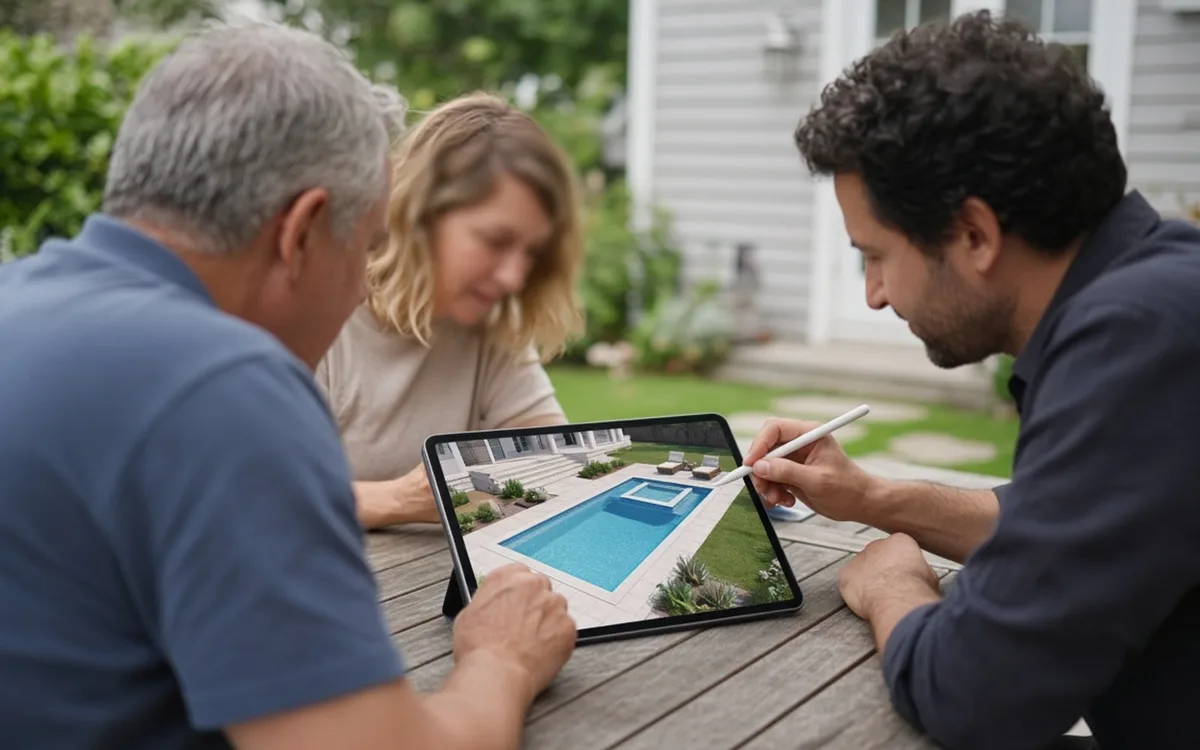
 Service guideCustom Pool Design & Build
Custom pool design and build covers everything from the site plan to first swim: excavation, the shell in gunite, fiberglass or vinyl, equipment and plumbing, electrical and bonding, the barrier, startup and training.
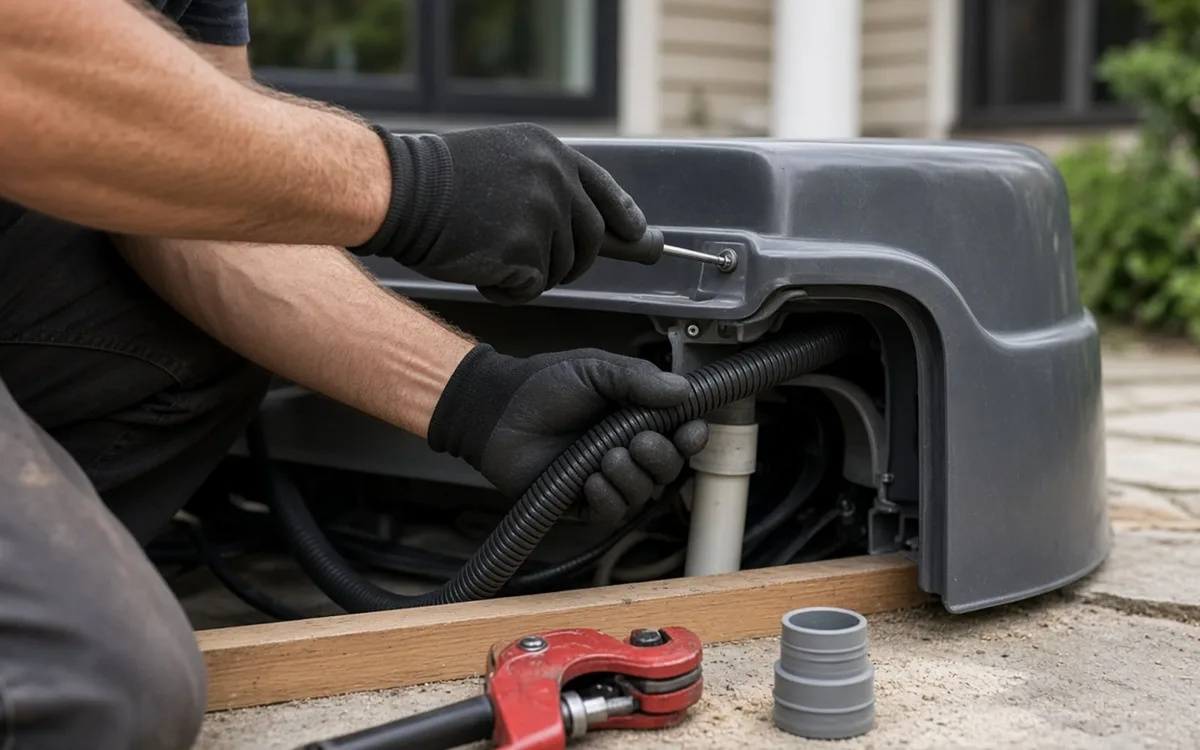
 Service guideSpa & Hot Tub Installation
Spa and hot tub installation covers the base, the delivery route, the dedicated electrical circuit with GFCI protection, drainage around the unit, and the cover and access arrangement that make it usable every week.
 Service guideWater Features & Waterfalls
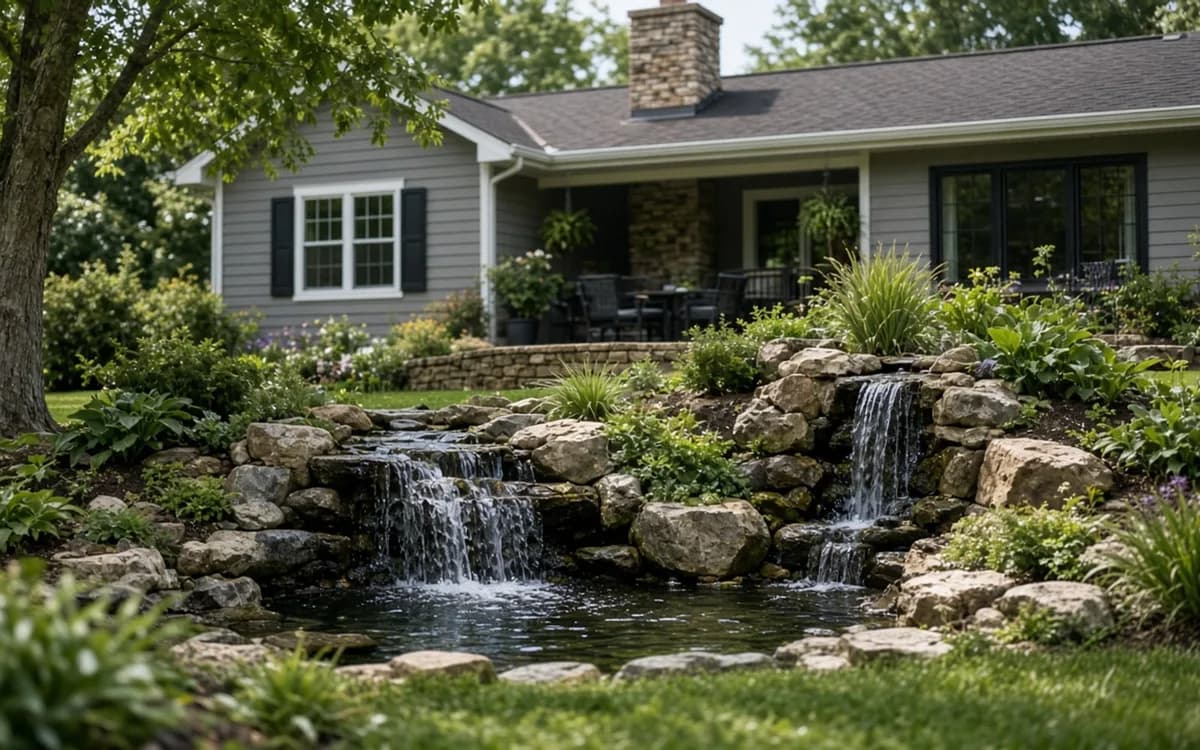
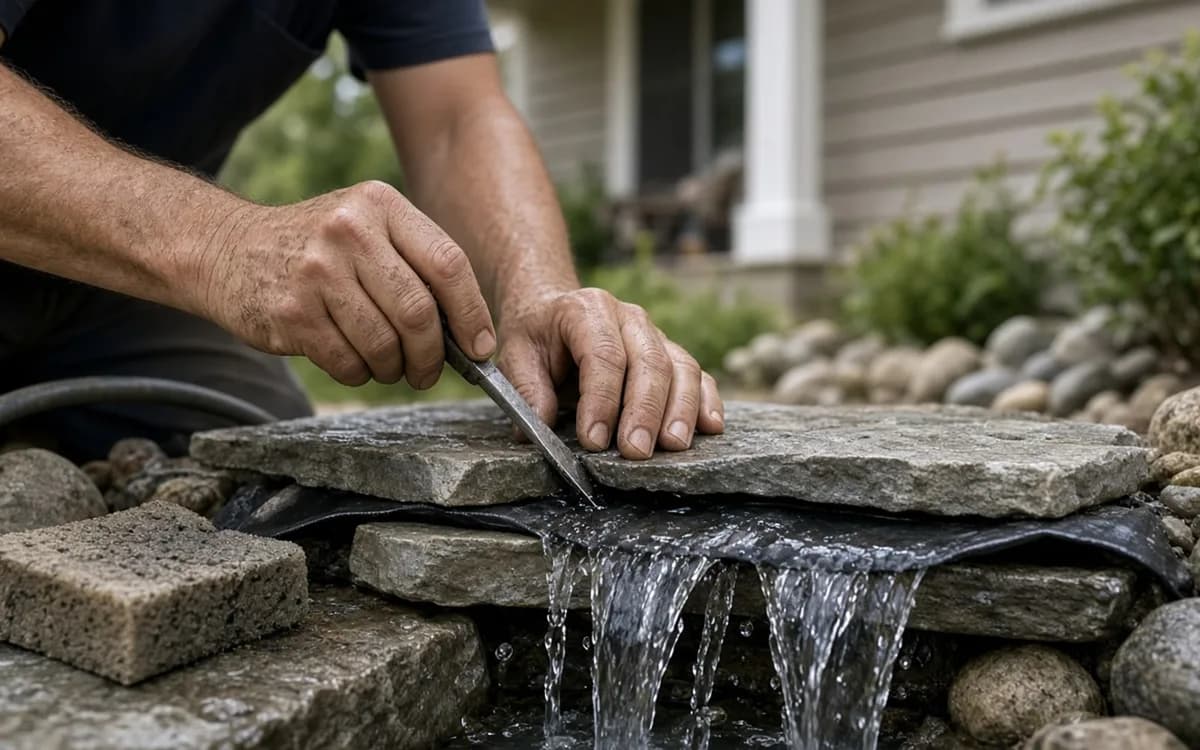
Water features add sound and motion to a pool through sheer descents, bubblers, deck jets, scuppers, spillover spas or rock waterfalls.
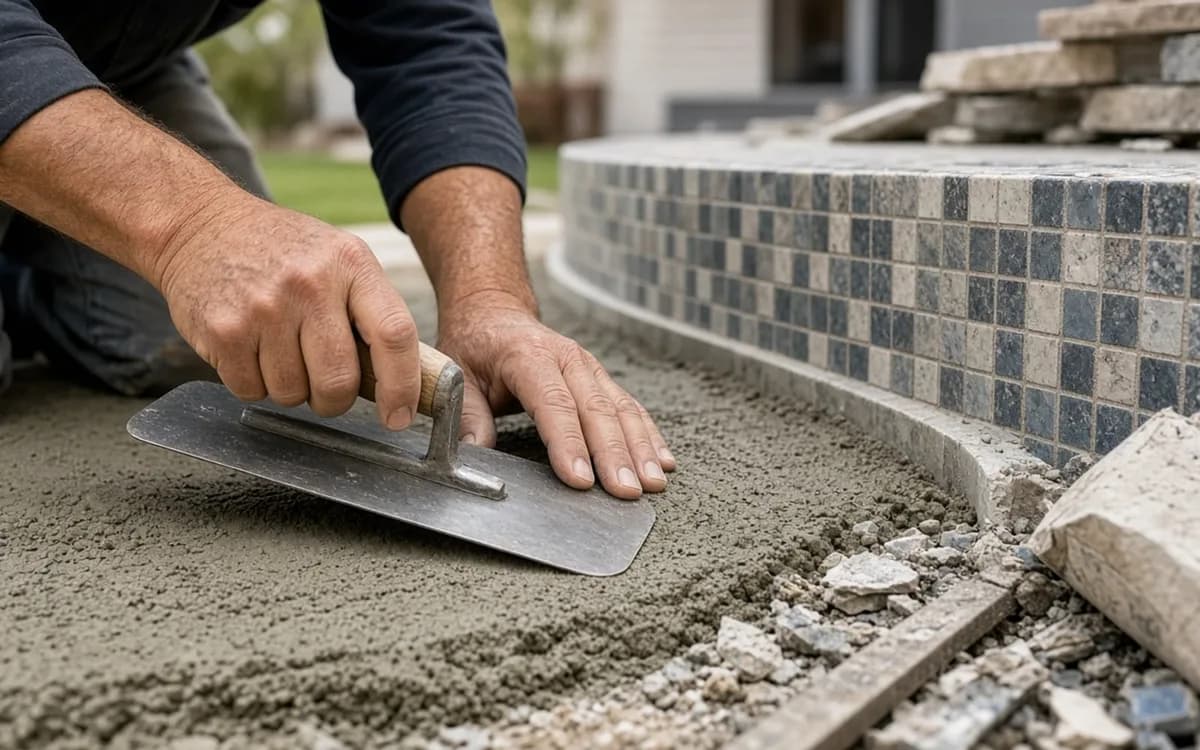
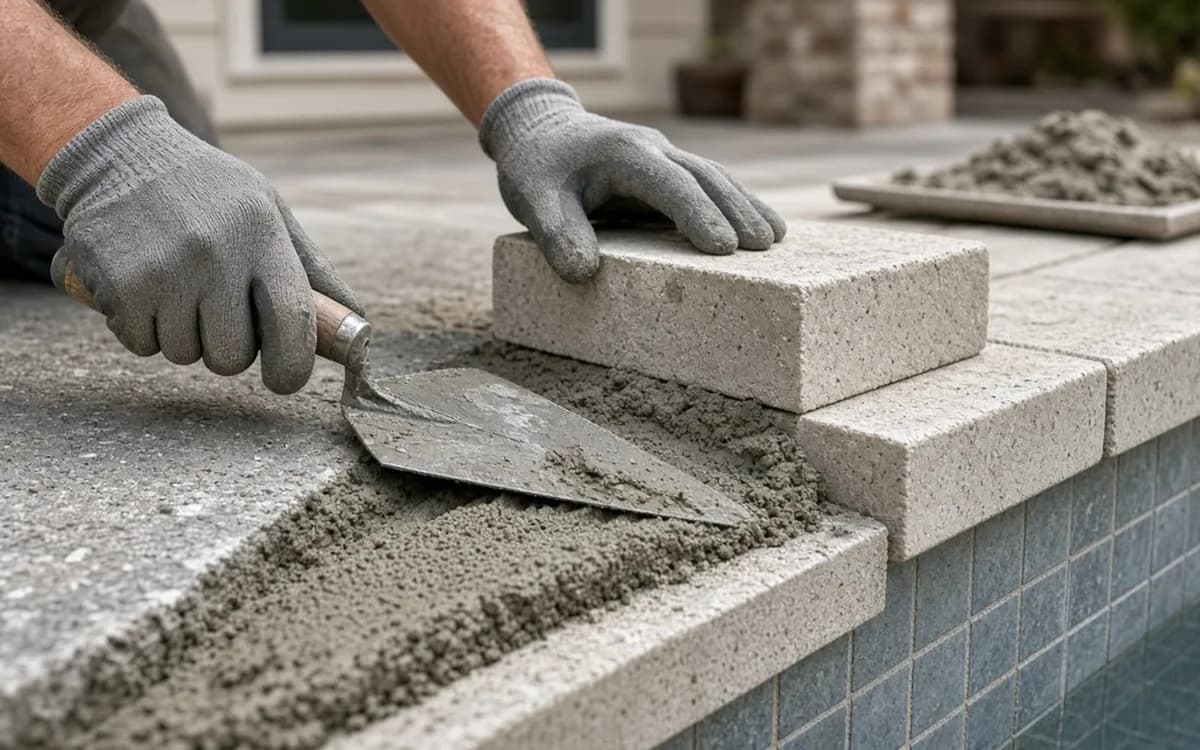
 Service guidePool Decking & Coping
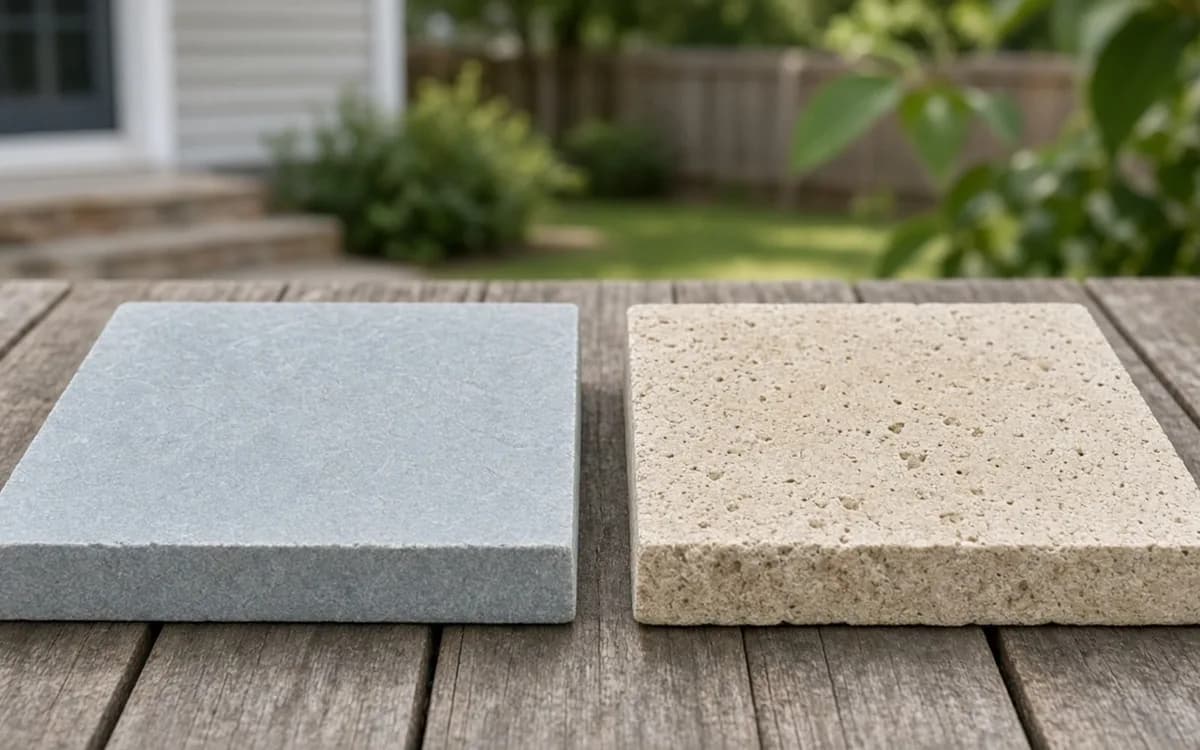
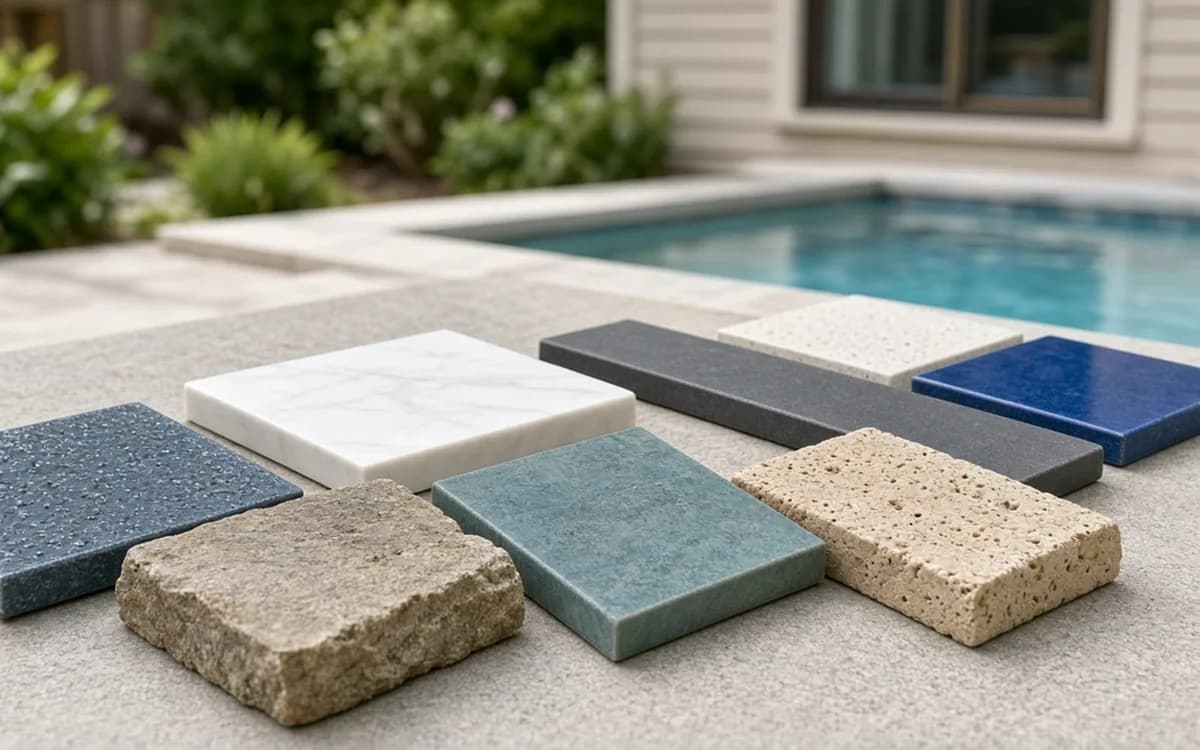
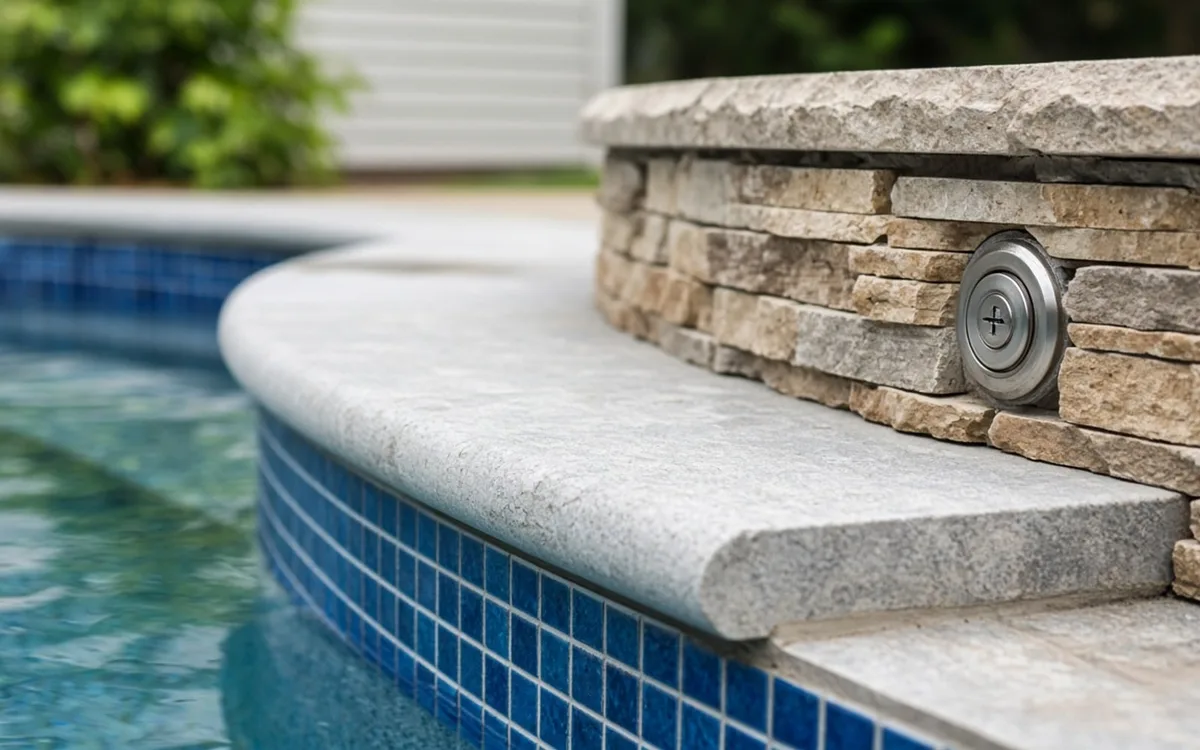
Pool decking and coping form the transition from water to yard: the coping caps the bond beam and the deck carries foot traffic and sheds water.
Three widely used guides give three different answers, and the difference is scope, not error. HomeAdvisor's 2026 guide reports an average of $41,835 for the pool itself, with fully installed projects at $44,300 to $86,500 and $50 to $125 per square foot, explicitly excluding decking, fencing and landscaping. Angi's benchmark lands at $65,909. River Pools' full-package figures run $95,000–$225,000 because they include patio, electrical and fencing in the same number. Per-square-foot figures split the same way: This Old House divides whole-project cost by water area and gets $180–$350 per sq ft, more than double HomeAdvisor's pool-only rate.
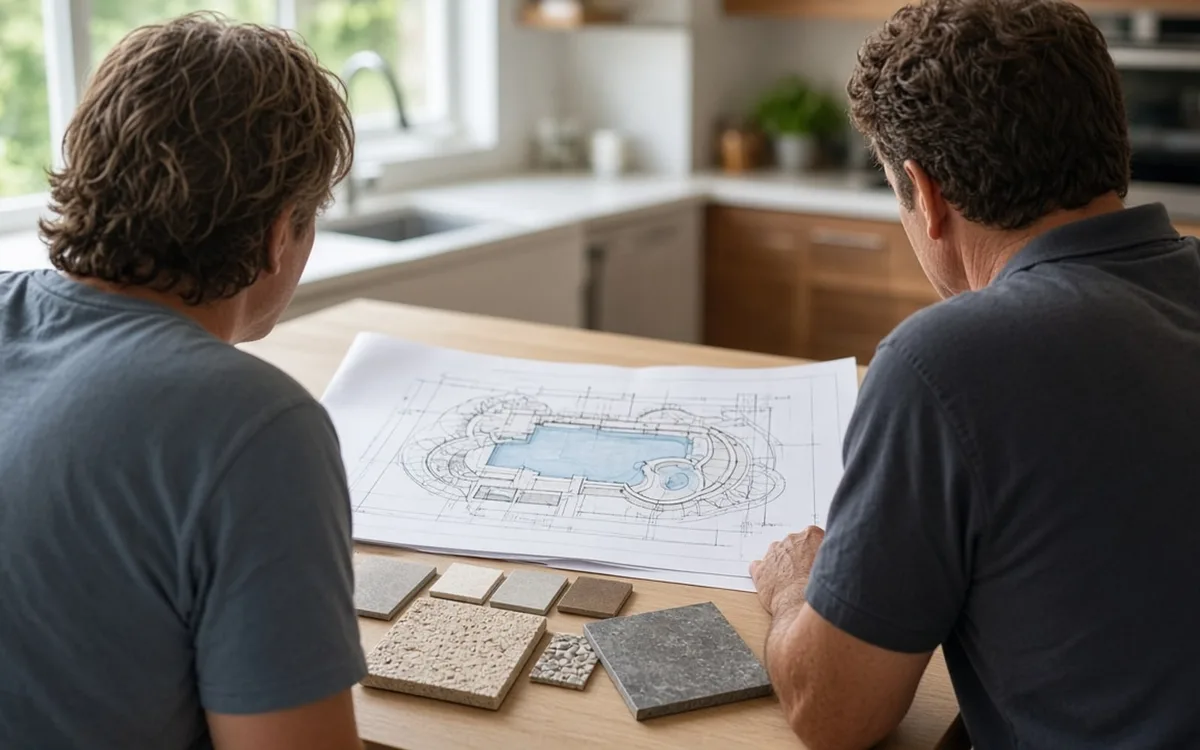
When you read a proposal, sort every line into shell, equipment, site work, surround and safety. A shell-only price that looks $20,000 cheaper usually is not once the concrete deck, the barrier fence and the electrical trench are added back. The custom pool design and build page breaks these buckets down line by line, and the cost calculator lets you toggle the add-ons that move the total most.
| Scope reported | Figure | Source |
|---|---|---|
| Inground pool, typical project | $44,499 to $87,349 (avg $65,909) | Angi, 2026 |
| Inground pool average | $41,835 (most $25,002 to $58,866) | HomeAdvisor, 2026 |
| Per square foot, pool only | $50 to $125 | HomeAdvisor, 2026 |
| Per square foot, whole project | $180 to $350 | This Old House, 2025 |
| Full concrete package | $95,000 to $225,000 | River Pools, 2025 |
| Extras owners typically budget | $25,000 to $50,000 | River Pools, 2025 |
| Permit fees | $500 to $2,000 | Today's Homeowner, 2026 |
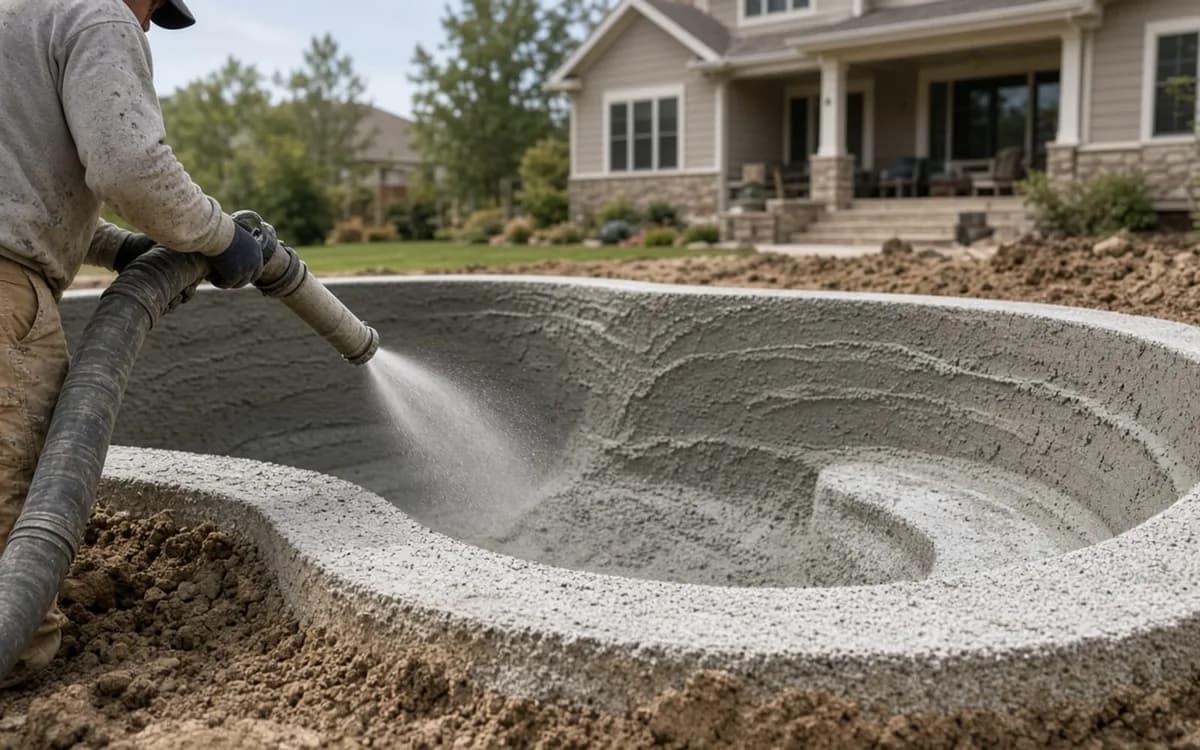
HomeAdvisor's 2026 material breakdown prices gunite at $65,000–$120,000, fiberglass at $25,000 to $60,000 and vinyl liner at $20,000 to $40,000 installed. Thursday Pools, a fiberglass manufacturer, prices a 2026 fiberglass install at $74,000–$113,000 depending on shell length, with vinyl at $35,000 to $80,000 and gunite at $50,000 to $120,000 or more. Concrete buys any shape and depth you can draw; fiberglass buys speed and a smooth, low-chemical interior; vinyl buys the lowest entry price and a liner you will replace.
Timeline is often the deciding factor for families who want to swim the same season. River Pools contrasts 2–6 weeks vs 3–6 months, because a fiberglass shell arrives finished on a truck while concrete goes through excavation, steel, shotcrete, a cure period, tile, and plaster. Read the gunite versus fiberglass comparison before you fall for a photo, and remember that the Realtor.com listing data below applies to any pool in good condition, not to a particular shell.
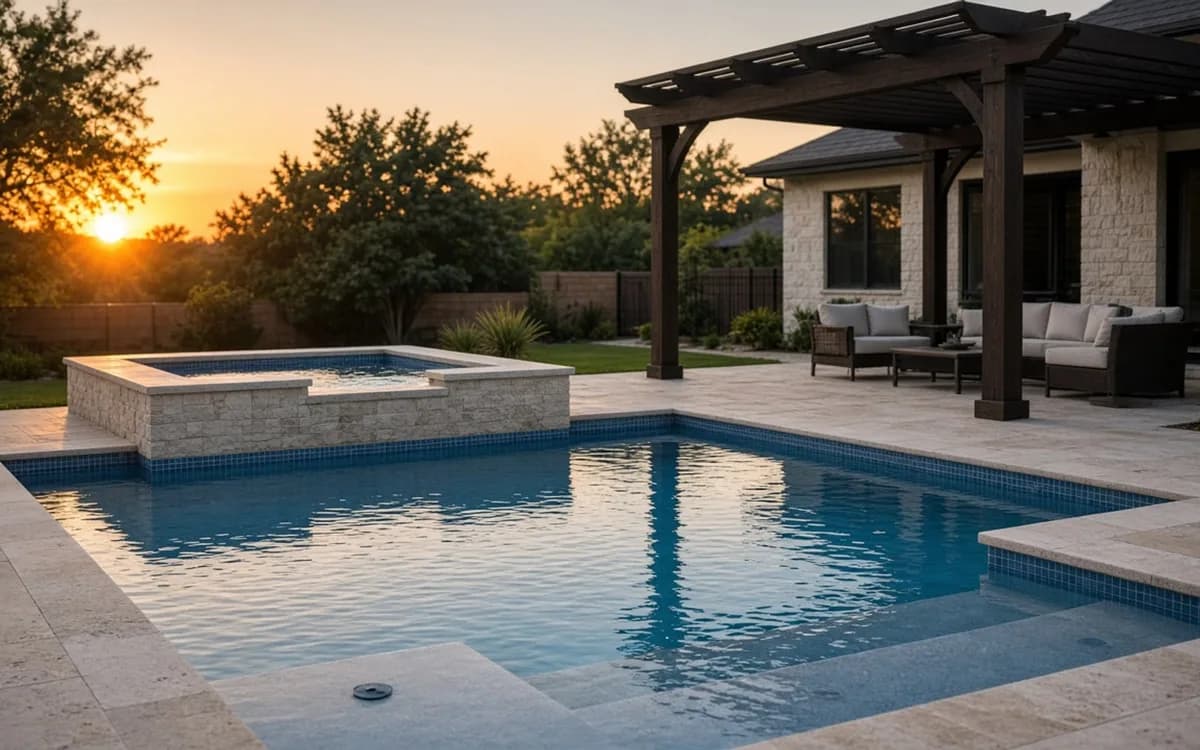
HomeAdvisor's 2026 timeline allots 2–6 weeks, with about a week for excavation and one to two months for construction, plumbing and electrical. Today's Homeowner adds that a fiberglass install takes 3 to 4 weeks against 8 to 12 weeks for gunite once the hole is dug. Neither includes the design and engineering phase, the utility locate, or the HOA review that some subdivisions require before the city will even accept the permit.
Plan backwards from the season you want. A gunite pool submitted for permit in February is realistic for July in most of the country; the same submission in May competes with every other backyard project in town. Angi's 2025 Home Spending Pulse found 71% of homeowners who hired a pro had postponed a project, which tells you builders have room in the shoulder seasons. Check the regional planning notes for how frost and monsoon seasons shift the calendar.
The safety numbers are sobering. CPSC's June 2026 report counted 376 per year, nearly 80% of them under age five, and its 2025 report found 85% of fatal child drownings happen at a residence rather than a public pool. CDC data ranks drowning as the leading cause of death for children ages one to four. A new pool without a compliant barrier is not a finished project, and most jurisdictions will not sign off the final inspection without one.
Fixr's 2025 guide prices a pool safety fence at $6,500 on average, from $7 to $10 per linear foot for mesh to $150 to $210 for frameless glass, with a 48-inch minimum height and some jurisdictions requiring 60 inches. Add self-closing, self-latching gates, door alarms on any house door that opens to the pool, and a compliant drain cover. Ask every builder to show the barrier plan on the site drawing, not as an allowance buried in the fine print.
Ownership cost is where a cheap build gets expensive. HomeAdvisor's 2026 maintenance guide puts annual upkeep at $960–$1,800 per year, with monthly service at $30 to $260 and seasonal opening or closing at $150 to $300 each. ENERGY STAR notes a pool pump can be a home's second-largest energy user at up to $310 per year, and that running the filter 6 hours a day instead of 24 cuts pump energy use by 75%.
The good news is that the equipment decision is mostly made for you. Since July 2021, Department of Energy rules mean most residential pumps sold are variable speed, which Pentair says cuts pump energy by up to 90%. Yet EIA's 2024 Residential Energy Consumption Survey found 48.2% of pool homes still report no variable-speed pump, which is the installed stock of older pools, not new builds. Spec the pump, the heater fuel and the sanitizer in writing so you know the operating bill before you sign.
Treat resale as a bonus. Realtor.com's April 2025 analysis found homes listed with a pool carried a 54% price premium, but the same report is careful to note the gap reflects larger, better-located homes that tend to have pools. Opendoor's May 2026 analysis, citing Zillow data, isolates the pool itself at 5–8% of home value nationally, rising to 10 to 15% or more in Florida, Arizona, Texas, California and Nevada.
That translates to Opendoor's estimate that homeowners typically recoup 40–60% of an inground pool's cost at resale. Build it because you will use it. Our analysis of the federal government's 2024 household survey found 47.7% of pool homes use the pool all twelve months and 41.9% use it one to six months, a split that tracks climate: 76.89% year-round in the West against 94.88% seasonal in the Northeast. More swimming months means more of the cost recovered in living.
New construction has cooled sharply from the pandemic peak. Pool Corporation, the largest pool products distributor, estimated about 61,000 new U.S. pools in 2024, roughly half the 2021 to 2022 pace, and just under 60,000 in 2025. PHTA's Q3 2025 Pulse Survey found 44% of firms reporting higher new-pool revenue against 37% lower, with 70% naming economic factors as their top challenge. Those new builds are a thin layer on the installed base: by our analysis of EIA's 2024 survey, 7.25% of occupied U.S. homes already have a pool.
For a homeowner that means better availability and more willingness to bid, but not necessarily discounts, because PHTA also found builder margins flat. Ownership still skews by income: our analysis of EIA's 2024 household survey found 15.0% of owner households earning $100,000 or more have a pool against 6.7% below that line, an 8.2 pts gap. Request three or four written proposals on the same site plan and compare scope. The review guide explains how to read a builder's track record, and the planning polls show what other homeowners are prioritizing this season.
Insist on the same site plan for every bidder and ask each to state its excavation assumptions: soil type, rock allowance, spoil haul-off, and what happens if the excavator hits groundwater. Then line up equipment by model number, not by brand, and confirm the heater fuel, the sanitizer, the automation and the lighting count. A proposal that lists a 'pump' without horsepower or a 'heater' without BTU rating is not comparable to one that does.
Finally, separate the base scope from elective upgrades. An attached spa, a sheer descent or waterfall, and upgraded decking and coping are real money and should be optional lines you can add or remove without changing the shell price. A spa need not ride on a pool at all: our analysis of the same 2024 federal survey found 69.1% of hot-tub homes report no swimming pool. Take the pool planning quiz to check which decisions you have not yet made, then send a precise brief through the estimate request.
Homeowner polls
Vote to see live results from other homeowners planning the same project.
Drives size, depth, heating and whether a spa is the better project.
No votes yet. Yours will be the first. · saved on this device
No votes yet. Yours will be the first. · saved on this device
No votes yet. Yours will be the first. · saved on this device
 Free toolInground pool cost calculator
Size, material tier and complexity in, a realistic budget range out.
 Free toolPool and spa comparisons, decided by your conditions
Side-by-side tables for the decisions that change the price most.
 Free toolPool planning quiz: nine things to know before the first site visit
9 questions that show what you already know and what to check next.
 Free toolPool planning polls
See what other planners chose and add your vote.
Enough for the pool, a code-required setback from property lines and structures, a 3 to 5 foot walkway or deck around the water, and a clear path at least 8 to 10 feet wide for an excavator and, for fiberglass, a crane or delivery truck. A 15 by 30 foot pool typically needs a usable area of roughly 25 by 40 feet once decking and setbacks are counted. Setbacks vary by city, so have the builder check zoning before the design is drawn.
Yes, but expect retaining walls, extra excavation and engineered footings, which can add tens of thousands of dollars. Today's Homeowner's 2026 state ranges show how local soil and terrain swing costs, from $34,800 to $72,000 in Arizona to $59,000 to $140,000 in California. A slope can also be an asset: a raised wall on the downhill side is how infinity edges are built. Ask for a soils report and a grading plan in the proposal.
Almost always yes. Most U.S. jurisdictions require a barrier of at least 48 inches with self-closing, self-latching gates regardless of cover, and some allow a rated automatic safety cover to substitute for one side only. Fixr's 2025 guide notes some areas require 60 inches. A cover adds a second layer, not a replacement. Confirm the exact rule with your building department before the fence line is priced.
Usually on chemicals, not on equipment. HomeAdvisor's 2026 guide says a saltwater pool averages $25,000 to build new and that a 20,000-gallon pool needs 10 to 12 forty-pound bags of salt to start, with the chlorinator adding about $50 a year in electricity. Annual salt and chemicals average around $100 versus several hundred for traditional chlorine, but the salt cell itself needs replacement every 5 to 7 years.
Late fall through winter in most regions. Builders have open crews, permits move faster because the counter is less busy, and you can be swimming when the first hot week arrives. In the Sun Belt the slow season is shorter, and monsoon or hurricane timing matters more than cold. HomeAdvisor's 2 to 6 week permit window is the part you can start early even if excavation has to wait for the ground to thaw.
Modestly. Today's Homeowner's 2026 guide estimates a pool adds about $50 to $75 a year to a typical homeowners policy, and many insurers require a compliant fence and no diving board or slide to keep the standard rate. Some also recommend raising liability coverage. Call your agent before you sign so the barrier plan satisfies both the city inspector and the underwriter.
You can, and sometimes should, because a hardscape specialist may price travertine or pavers better than a pool builder's subcontractor. The risk is coordination: the deck must be poured after the shell has settled and plumbing is pressure-tested, and coping must be set before deck concrete. If you split it, name one party responsible for the sequence and the bond beam elevation in writing.
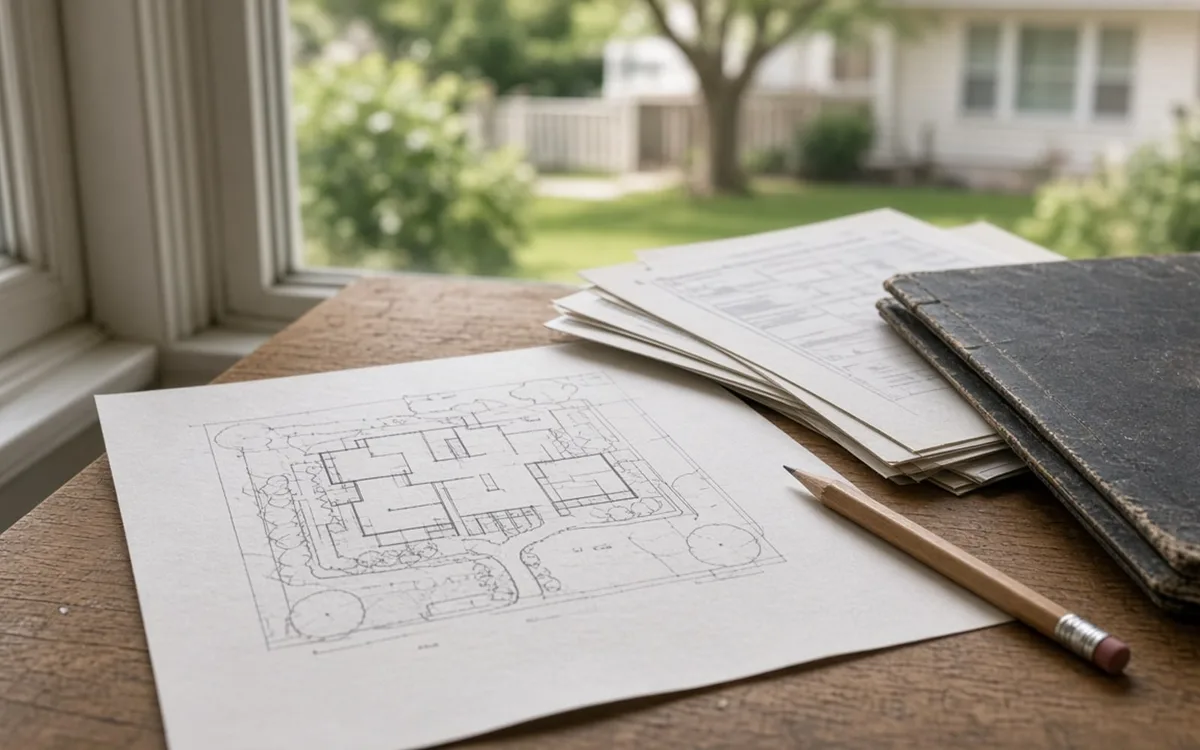
You describe the project, attach yard photos and any survey or plot plan, and say how you plan to use the water. Matched independent pool professionals in your area respond with written proposals. There is no fee, no obligation and no exclusivity; you compare scopes and pick one, or none. The request form lists the details that make proposals easier to compare.
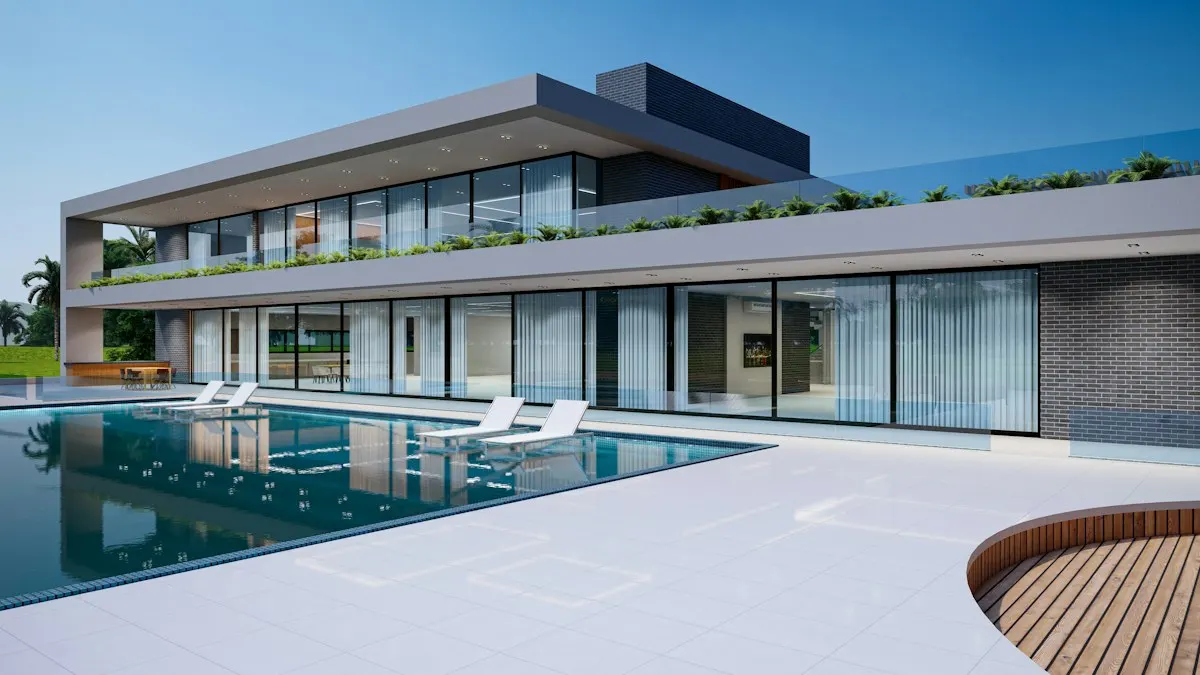
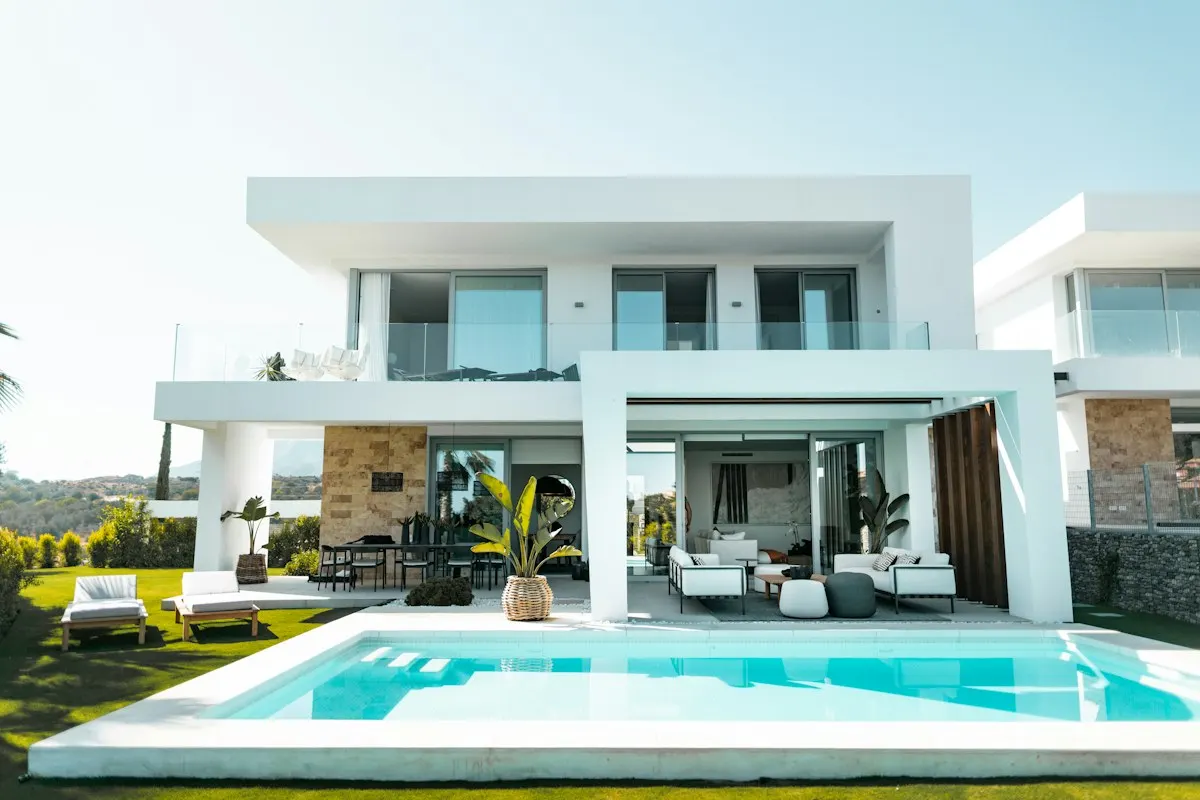
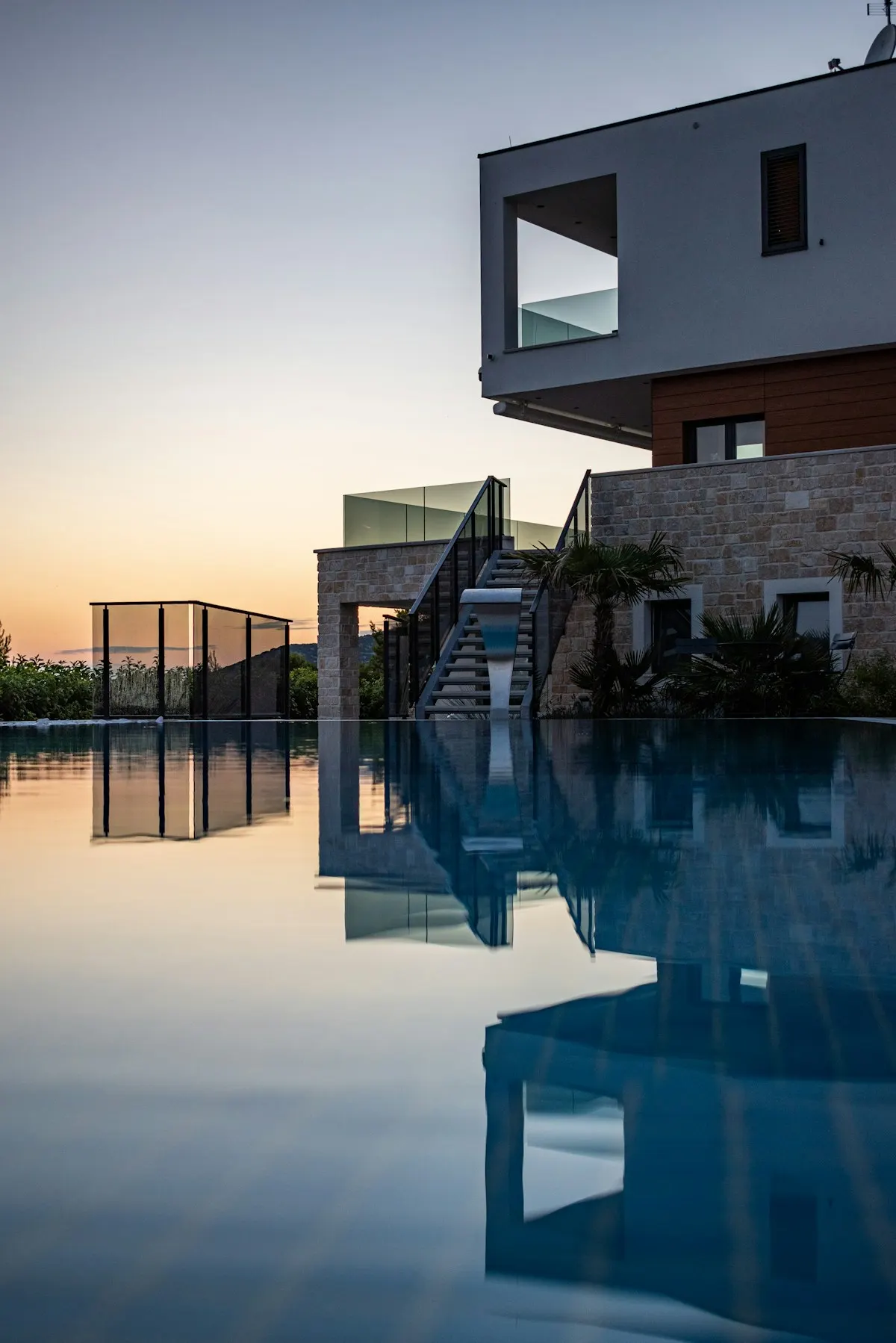
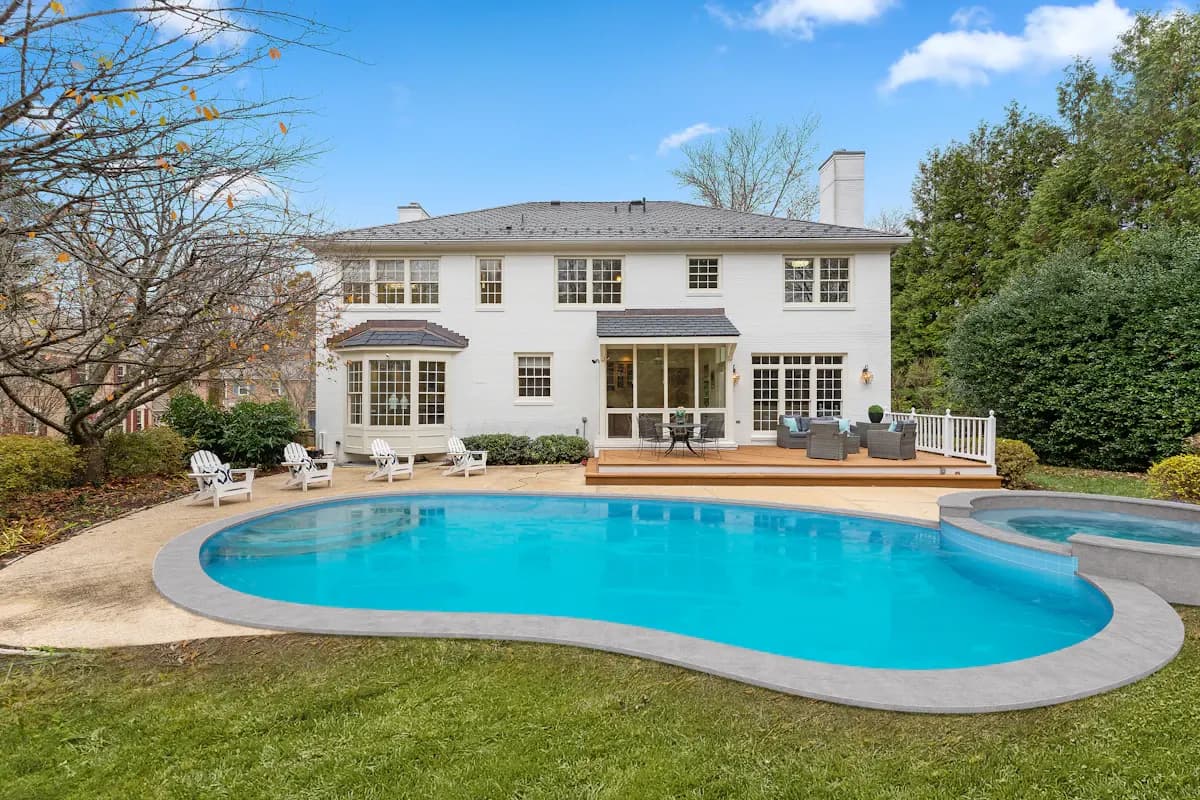
 LocationsRegional planning notes
How climate, codes and prices change a project across U.S. regions.
 ArticlesPlanning articles
Cost guides, checklists and mistakes to avoid before you sign.
 ReviewsHow to read reviews
What genuine contractor reviews look like and what they leave out.
Tell us the size, the condition of what is there now, and what you want to change. Pool Plan Compass passes your request to independent local professionals, who reply with written, no-obligation estimates. The service is free to use.