Which shell type are you leaning toward?
No votes yet. Yours will be the first. · saved on this device
Loading...

Pool Plan Compass · Fiberglass pool vs Vinyl liner pool
Pick vinyl if the upfront budget is tight, you want a custom shape without gunite pricing, or your season is short. Pick fiberglass if you want the lowest maintenance and no liner to replace. River Pools puts liner replacement every 5 to 10 years at roughly $6,000 to $10,000, which is the main cost that closes the upfront gap over time.
Photo: Jay Solomon · License.
Fiberglass and vinyl both install in weeks rather than months, and both are common in northern markets with short building seasons. HomeAdvisor's 2026 guide puts vinyl at the bottom of the price range and fiberglass slightly above it, while Thursday Pools prices fiberglass at $74,000–$113,000 by shell size and vinyl at $35,000 to $80,000. The decision usually comes down to upfront budget against fifteen-year cost.
This page covers who each pool suits, the long-run math, climate, resale and the questions that make two bids comparable. The gunite versus fiberglass comparison covers the other common decision. If you have already ruled out concrete for budget or schedule reasons, this is the comparison that decides your pool, and the difference often comes down to how long you expect to own the house.
Both are faster and cheaper than gunite. Fiberglass costs more upfront and has no liner to replace; vinyl costs the least to build and carries a liner that River Pools says is replaced every 5 to 10 years. In freeze regions both are common, and the choice is usually total cost over fifteen years against upfront budget.
| Factor | Fiberglass pool | Vinyl liner pool |
|---|---|---|
| Upfront cost | $25,000 to $60,000 (HomeAdvisor 2026); about $74,000 to $113,000 by size (Thursday Pools 2026) | $20,000 to $40,000 (HomeAdvisor 2026); $35,000 to $80,000 (Thursday Pools 2026) |
| Lifespan and recurring cost | Shell decades; no liner | Structure decades; liner every 5 to 10 years at roughly $6,000 to $10,000 (River Pools) |
| Maintenance | Smooth surface, low chemical demand | Soft surface; liner can be punctured by pets, toys or sharp objects; wrinkles from chemistry |
| Appearance | Molded shapes with integrated steps; colored gelcoat | Custom shapes possible in steel or polymer walls; printed liner patterns |
| Climate fit | Good in freeze-thaw | Good in freeze-thaw; liner must be protected when closing |
| Install time | 2 to 6+ weeks (River Pools) | Typically 3 to 6 weeks; wall kit assembled on site |
| Resale / ROI | Same as any pool in good condition; no liner-replacement question at sale | Buyers often ask liner age; a fresh liner helps a listing |
| Best for | Owners who want the lowest maintenance in the fast-install class | Tight upfront budgets, custom shapes on a budget, short seasons |
Vinyl wins on the first check. HomeAdvisor's low end of $20,000 is the least expensive way to get an inground pool, and in a Midwestern yard that swims fourteen weeks a year, spending the savings on a heater and a good cover may deliver more swimming than a fiberglass shell would. It also allows custom shapes without gunite prices, because the walls are panels and the floor is troweled.
Fiberglass wins over fifteen years for a household that will keep the house. River Pools' estimate of a liner every 5 to 10 years at $6,000 to $10,000 means two or three replacements in the life of a vinyl pool, which erases the upfront gap. Fiberglass also avoids the puncture risk from dogs and toys. If the budget can stretch to the fiberglass range, the calculator will show the difference on your size.
Vinyl suits owners who want a large or custom-shaped pool on a limited budget, especially in regions where the season is short and the pool is closed for months. By our analysis of EIA's 2024 survey, 94.88% of Northeastern pool homes use the pool one to six months, against 41.9% nationally, and only 4.4% of Midwestern homes have a pool at all. It also suits owners who expect to renovate or sell within a few years and want the lowest entry cost. A vinyl pool can be built in almost any shape and size, and the liner pattern offers a range of looks.
Fiberglass suits owners who want minimal maintenance and a durable surface that resists algae and needs less brushing. It favors families with young children, since molded steps and benches are smooth and easy to navigate. The trade-off is less shape flexibility and a need for delivery access. If your yard fits a stock shell and a crane can reach it, fiberglass is often the easier pool to own.
Start with the build price. HomeAdvisor's 2026 figures place vinyl below fiberglass, and Thursday Pools' 2026 ranges for the two overlap only between $74,000 and $80,000. For a mid-size pool, the upfront difference depends heavily on size, wall type and options, and it narrows at the top of both ranges. Whatever the gap in your bids, that saving is real on day one; HomeAdvisor lists vinyl at $20,000 to $40,000 installed against $25,000 to $60,000 for fiberglass.
Over fifteen years, a vinyl pool will usually need at least one liner replacement, and possibly two if the first liner is damaged or the water chemistry is poorly managed. River Pools prices each replacement at roughly $6,000 to $10,000. Add small patching costs and slightly higher chemical use, and the lifetime costs of the two converge. Fiberglass usually ends up close to or below vinyl by the second liner.
| Cost item | Fiberglass | Vinyl liner |
|---|---|---|
| Upfront build | Higher | Lower |
| Liner or surface renewal | Rare | Every 5 to 10 years per River Pools |
| Chemical demand | Lower | Moderate |
| Puncture repairs | Rare | Occasional patches |
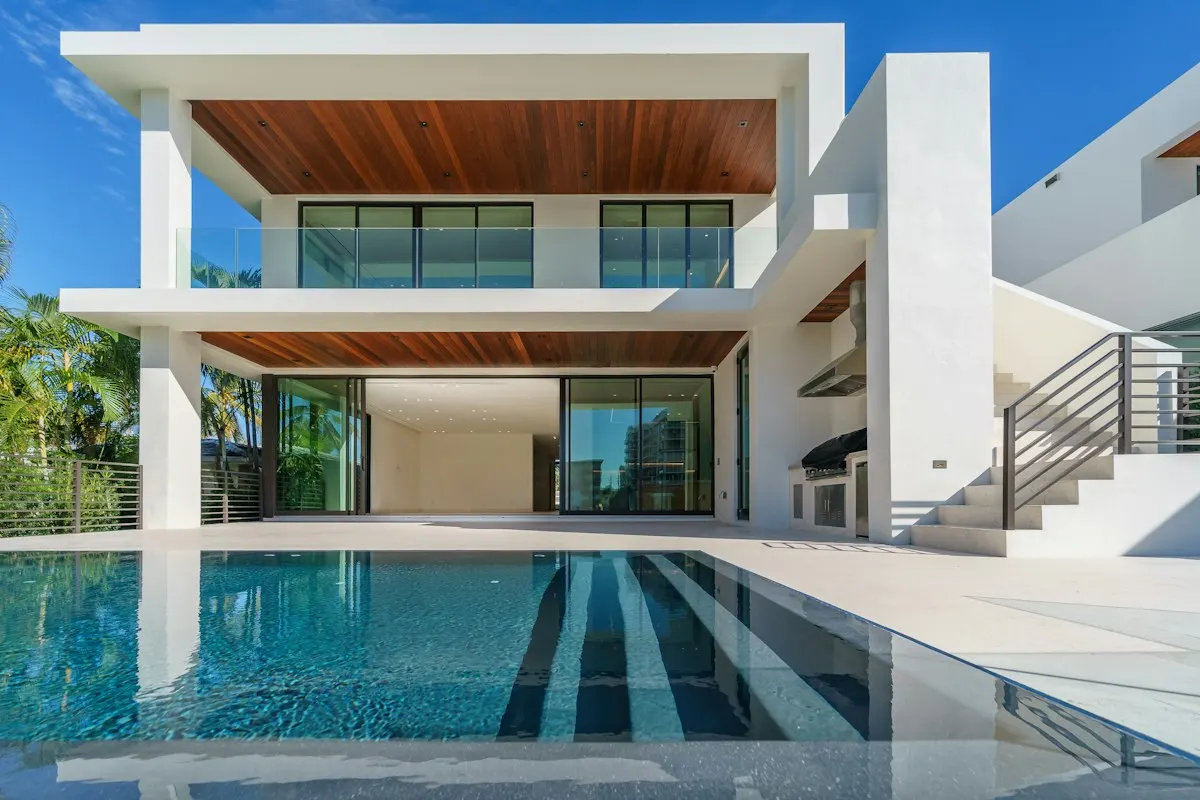
Both types handle freeze-thaw well. Fiberglass flexes, and vinyl pool walls are designed to tolerate ground movement. The key in freeze climates is winterization: vinyl pools need the water level and cover managed carefully so the liner is not stretched or torn by ice, and fiberglass pools must be kept partly full so the shell is not pushed by groundwater. Northern builders routinely handle both.
High water tables deserve special care. An empty vinyl pool can let the liner float, and an empty fiberglass shell can pop out of the ground. Never drain either type without professional guidance. Ask each builder how they manage groundwater during installation and what the manual says about draining. The glossary explains hydrostatic relief valves.
The presence of a pool drives value more than the type. Opendoor estimates buyers typically return 40–60% of the build cost at sale, and that figure is not broken out by shell. Pool condition is what inspectors and buyers look at, and the question every vinyl pool buyer asks is how old the liner is.
A fresh liner shows well and answers that question before it becomes a negotiation point. An older liner with fading, wrinkles or patches invites a price discount or a repair request. Fiberglass avoids the liner question, which can make listings simpler. If you expect to sell within ten years of building, factor in a liner replacement before listing as part of the vinyl budget.
Vinyl liners fail from punctures, UV fading at the waterline, wrinkles caused by chemistry swings and tears from pool toys, pets or sharp objects. A thicker liner gauge, careful water balance and a solid cover reduce these risks. Steel wall panels can corrode where water gets behind them, so ask about polymer walls in salt pools or wet soils.
Fiberglass problems are rarer but usually more expensive. A shell set on a poorly compacted base can shift, and gelcoat can blister or fade if water chemistry is neglected or the shell was poorly made. Choose an established manufacturer, ask about gelcoat quality, and insist that backfill and leveling follow the manufacturer's installation guide. Photos of those steps are worth requesting.

For vinyl, confirm wall material, liner thickness, liner pattern, whether the floor is grout or concrete, and what the liner warranty covers, since many are prorated. For fiberglass, confirm manufacturer, model, gelcoat type, delivery and crane costs, backfill material and structural warranty. Ask both builders about coping, deck and equipment so the scopes match.
Also ask how each builder handles long-term service. HomeAdvisor's 2026 guide puts monthly pool service at $30 to $260, and for vinyl that service means the water balance that protects the liner. A vinyl builder who replaces liners locally is valuable, while a fiberglass dealer's relationship with the manufacturer matters for warranty claims. The pool cost guide shows typical price bands, and the planning quiz helps you confirm your priorities before meetings. A builder who answers these questions clearly in writing is usually the easier one to work with after signing.
Homeowner polls
No votes yet. Yours will be the first. · saved on this device
Angi's 2026 benchmark for the pool alone is $44,499 to $87,349.
No votes yet. Yours will be the first. · saved on this device
Bob Vila's 2024 guide gives 5 to 10 years, with a well-kept 20-mil liner reaching 10 to 12 and HomeAdvisor citing up to 15 to 20 with care. Sun, chemistry and whether the pool is closed properly decide it. A 28-mil liner adds $300 to $500 and resists wear better.
Yes, with attention to the wall material: steel wall panels can corrode from salt splash at the coping over years, and polymer walls do not. Ask which wall the builder uses. The liner itself is unaffected by salt at normal levels.
Not in markets where they are common, which is most of the North. Buyers ask liner age, so keep the receipt. In the Sun Belt, where gunite dominates, some buyers see vinyl as a lesser pool, which is a reason to check local expectations before choosing.
Vinyl liners come in several thicknesses, commonly described in mils. Thicker liners resist punctures and wrinkles better but cost more and can be harder to install smoothly. Many builders offer a standard and an upgraded gauge. Ask which gauge is included, whether the warranty differs by thickness, and whether the floor and walls use the same material. For active families or pets, the thicker option is usually worth considering.
Yes. Many vinyl pool kits offer tanning ledges, benches and wide entry steps, sometimes as separate fiberglass or polymer inserts that sit inside the liner. The liner is fitted around them. Ask how the ledge is built and what happens to it when the liner is replaced. A molded ledge insert can last through several liners.
Fiberglass manufacturers offer a range of gelcoat colors and finishes, including sparkle and textured options. The choice is narrower than a pebble finish on gunite but broader than many owners expect. Lighter colors show debris more but stay cooler, while darker colors look deeper. Ask to see samples in water, because color shifts once the pool is filled.
Both install quickly compared with gunite. Vinyl walls and liners are assembled on site, which usually requires smaller equipment than a fiberglass delivery. Fiberglass needs a truck and often a crane to set the shell, which can mean a single day of heavier disruption. Both need excavation, plumbing, backfill and decking, so yard disruption is broadly similar.
Converting a vinyl pool to fiberglass means removing the walls and liner, reshaping the hole and setting a new shell, which is closer to a new build than a renovation. Some owners do it when a liner and walls both need replacement. If you are unsure now, compare fifteen-year costs carefully rather than planning a later conversion.
Both are smooth underfoot, which makes them comfortable for children compared with rough plaster or pebble. Fiberglass steps and benches are firm and slip-resistant, while vinyl feels softer but can wrinkle. Parents often prefer fiberglass for its molded seating and large shallow areas, but vinyl pools can include similar features through inserts and custom shapes.
 ComparisonGunite (concrete) pool vs Fiberglass pool
Choose gunite if you want a custom shape, an integrated raised spa, a sloped-lot design or an infinity edge, and you accept a longer build and periodic resurfacing.
 ComparisonIn-ground spa vs Portable hot tub
Choose an in-ground spa if you are building a pool and want the spa to share its equipment and double as a water feature.
 ComparisonPoured concrete deck vs Paver or travertine deck
Choose poured concrete for the lowest cost per square foot, large areas and a smooth continuous surface, knowing it will crack at some point and needs sealing.
 ComparisonSaltwater chlorine generator vs Traditional chlorine
Choose a salt chlorine generator if you swim in a warm climate over a long season, dislike buying and handling chlorine, and want softer-feeling water.
 ComparisonNatural gas heater vs Electric heat pump
Choose a gas heater if you need fast heat for a spa, swim mainly on weekends, or live where spring and fall air is cold.
 Service guideCustom Pool Design & Build
Custom pool design and build covers everything from the site plan to first swim: excavation, the shell in gunite, fiberglass or vinyl, equipment and plumbing, electrical and bonding, the barrier, startup and training.
 Service guideSpa & Hot Tub Installation
Spa and hot tub installation covers the base, the delivery route, the dedicated electrical circuit with GFCI protection, drainage around the unit, and the cover and access arrangement that make it usable every week.
 Service guideWater Features & Waterfalls
Water features add sound and motion to a pool through sheer descents, bubblers, deck jets, scuppers, spillover spas or rock waterfalls.
 Service guidePool Decking & Coping
Pool decking and coping form the transition from water to yard: the coping caps the bond beam and the deck carries foot traffic and sheds water.
 Free toolInground pool cost calculator
Size, material tier and complexity in, a realistic budget range out.
 Free toolPool planning quiz: nine things to know before the first site visit
9 questions that show what you already know and what to check next.
 Free toolPool planning polls
See what other planners chose and add your vote.
Tell us the size, the condition of what is there now, and what you want to change. Pool Plan Compass passes your request to independent local professionals, who reply with written, no-obligation estimates. The service is free to use.