Which shell type are you leaning toward?
No votes yet. Yours will be the first. · saved on this device
Loading...
Pool Plan Compass · Materials
Choose the shell first: gunite for any shape and an integrated spa, fiberglass for speed and low upkeep, vinyl for the lowest upfront price. Then match the interior finish, deck, coping and equipment to your climate and season. A variable-speed pump, a cover and a heater sized to how you swim decide most of the running cost for the next fifteen years.
By Pool Plan Compass editorial · Updated 2026-09-25
A pool is a stack of material decisions, and each layer constrains the next. The shell sets what interiors are possible. The interior affects water chemistry. The coping must suit the deck, and the deck must suit your climate and your feet. Equipment is the layer most owners think about last, and it is the one they pay for every month.
This guide moves through that stack from the ground up. It uses published figures from HomeAdvisor, Thursday Pools, River Pools, Fixr, Concrete Network and ENERGY STAR, and it points to the comparison pages where a single decision deserves a full page of its own. Read it with your site in mind: a choice that suits a flat, sunny Arizona lot can be the wrong one for a wet, shaded yard in Ohio.
Gunite, also sold as shotcrete, is concrete sprayed over a steel cage. It allows any shape, depth, ledge, beach entry or raised spa, and it suits sloped lots and custom designs. It is also the slowest and most expensive, at $65,000–$120,000 installed in HomeAdvisor's 2026 table. The concrete shell lasts for decades, but its interior finish needs periodic resurfacing.
Fiberglass shells arrive as one piece from a factory and are set in a prepared hole. River Pools reports install times of 2–6 weeks vs 3–6 months for fiberglass versus concrete. The surface is smooth and non-porous, which reduces brushing and chemicals, but shapes and sizes are limited to the molds and to what a truck and crane can deliver. Vinyl liner pools use steel or polymer walls with a replaceable liner, and cost least upfront.
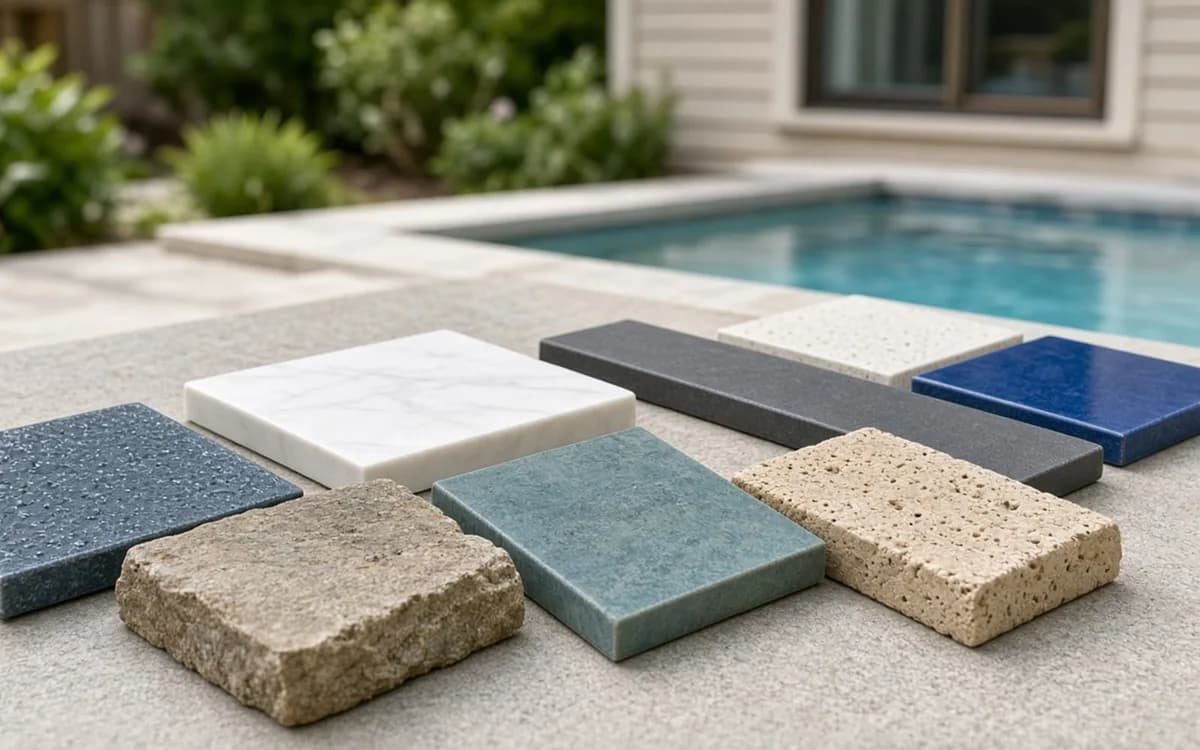
A gunite shell needs an interior finish. White plaster is the traditional and least expensive option, with a classic bright-blue look, but it is the most porous and the first to etch or stain. Colored plaster, quartz aggregate and pebble finishes cost more and generally last longer, with a textured feel underfoot that some swimmers love and others find rough. All-tile interiors sit at the top of the cost range.
Finish life depends heavily on water chemistry. Aggressive water dissolves plaster; scaling water deposits calcium. A builder who explains startup chemistry, curing and the first month of brushing is protecting the finish you paid for. River Pools puts concrete resurfacing at $10,000 to $20,000 every 10 to 15 years, so a longer-lasting finish can pay back part of its premium over two cycles.
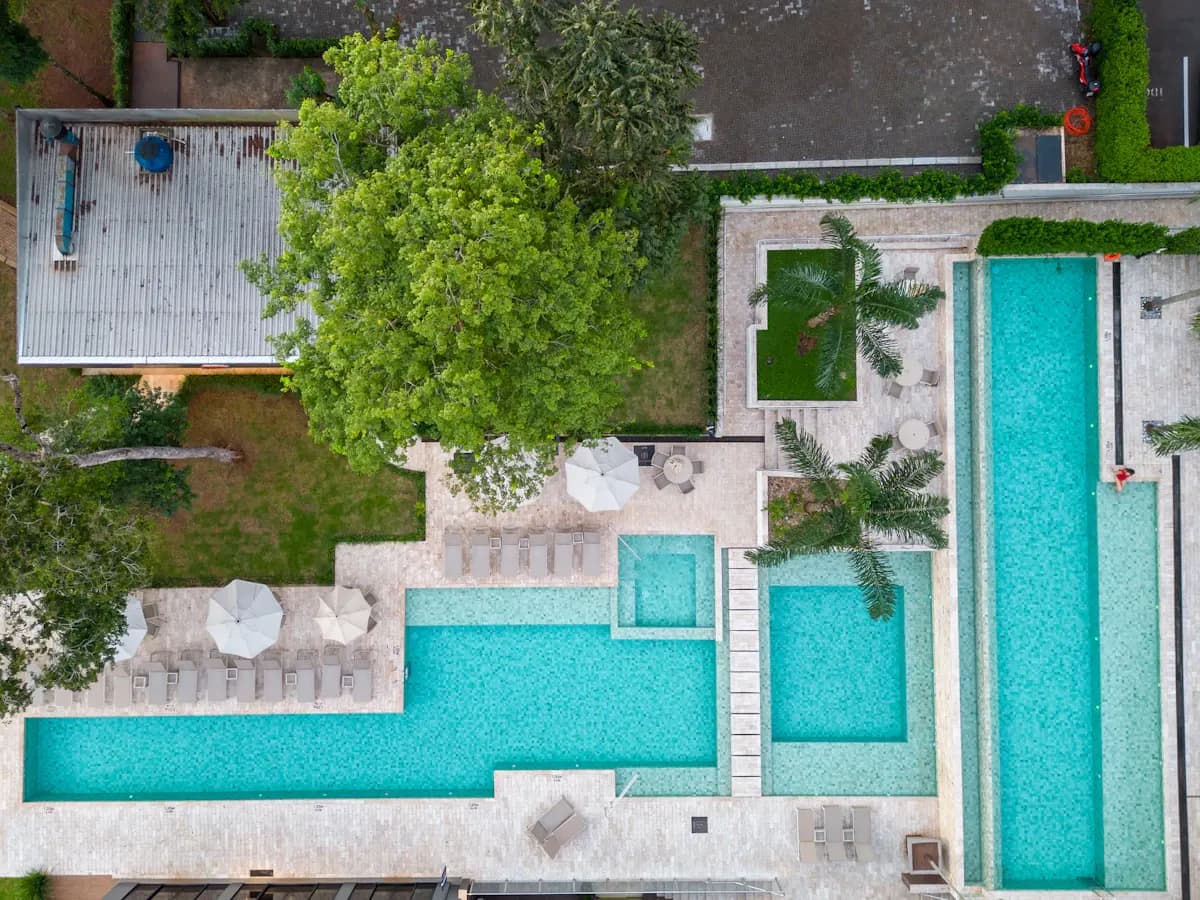
Concrete is the most common deck. Concrete Network prices pool decks at $6–$18+ per sq ft, from broom finish at the low end to stamped and stained at the top. River Pools puts pool patios at $10–$50+ per sq ft, with basic concrete at the low end and luxury stone above. Pavers and travertine cost more per square foot, stay cooler in hot sun and can be lifted and reset if the ground settles.
Coping caps the pool edge and must shed water away from the shell. Poured cantilever concrete, precast concrete and natural stone are the main choices. Soft stone and some limestones can pit or spall with salt water or freeze cycles, so ask for material rated for pool use in your climate. The concrete versus pavers comparison goes deeper on the deck choice.
The pump runs more hours than any other equipment, and ENERGY STAR notes it can be a home's second-largest energy user at up to $310 per year. Pentair notes that variable-speed pumps can cut pump energy by up to 90%, and federal efficiency rules since 2021 make them the default for most new residential pools. Existing pools lag: by our analysis of EIA's 2024 household survey, 47.7% of pool homes report a variable-speed pump, from 21.5% in the Northeast to 77.0% in the West. Pool Goods estimates annual savings of $345–$735 per year against single-speed pumps.
Filters come in three main types. Cartridge filters are simple and use no backwash water. Sand filters are cheap and tolerant but filter less finely. Diatomaceous earth filters clean the finest but need more handling. Automation lets you schedule pump speeds, lights, heaters and features from a phone. It is optional, but it makes efficient pump schedules far easier to keep, especially on pools with water features or a spa.
The EIA's 2024 survey found 15.8% of U.S. pool homes heat with natural gas and 13.3% with electricity, while 60.06% report an unheated pool. Gas heaters warm water quickly regardless of air temperature, which suits spas and weekend use. Heat pumps pull heat from the air, run much cheaper per degree in warm and humid weather, and work best when left on with a cover.
The right choice depends on how and when you swim. If you want the spa hot in thirty minutes on a cool evening, gas usually wins. If you want the pool held at a steady temperature from May through October in a mild climate, a heat pump usually wins. The gas heater versus heat pump page covers operating costs and gas line sizing in detail.
Both options chlorinate the water; the difference is how the chlorine gets there. A salt chlorine generator makes it on the equipment pad from dissolved salt, which gives a softer water feel and fewer chemical purchases. HomeAdvisor's 2026 guide puts the average saltwater pool at $25,000, and a conversion of an existing pool is a modest project by comparison.
Traditional chlorine from tablets or liquid costs less upfront and works at any water temperature. Salt can pit soft stone decks and corrode some metal components, so natural stone coping and older steel walls deserve extra care. The saltwater versus chlorine comparison covers cell replacement, climate and deck compatibility. Decide the sanitizer before you choose coping stone, not after.
An automatic cover is the one option that saves money, reduces risk and cuts maintenance at once. Thursday Pools' 2026 guide prices them at $8,000–$20,000 as an add-on. A cover reduces evaporation, heat loss and debris, and some models meet safety-cover standards. It is much easier to add while the coping and deck are being built than after, because the track and vault need to be planned into the structure.
LED lighting, water features and a spa are easier to include during construction too. Bob Vila prices pool water features at $450–$5,000 depending on type. If the budget cannot stretch now, ask the builder to run conduit and plumbing stubs for features you may add later. The water features page explains which additions need their own pump.
Homeowner polls
No votes yet. Yours will be the first. · saved on this device
No votes yet. Yours will be the first. · saved on this device
No votes yet. Yours will be the first. · saved on this device
All three shell structures can last for decades when properly installed. The difference is what wears on top of them. Gunite interiors need resurfacing on a cycle River Pools puts at 10 to 15 years, vinyl liners are replaced every 5 to 10 years, and fiberglass gelcoat rarely needs refinishing. Structural life depends as much on soil, drainage and installation quality as on the shell type.
For many owners it is, because pebble and quartz finishes generally resist etching and staining longer than plain white plaster, which stretches the time between resurfacing. The trade-offs are a rougher feel underfoot and a higher initial price. If you have young swimmers who spend hours in the pool, feel a sample with bare feet before deciding, and ask the builder how many years their local pebble jobs are lasting.
Porcelain and glass tiles rated for submerged use are the common choices. Glass shows calcium scale more readily in hard water, while porcelain hides it better. The more important factor is installation: the tile must be set on a stable bond beam with the right thinset and an expansion joint between the coping and the deck. Most tile failures trace to movement or water behind the tile, not the tile itself.
Dark interiors absorb a little more sunlight and can raise water temperature slightly, but the effect is modest compared with a solar cover or heater. The bigger reason to choose a dark finish is appearance, since it gives a lagoon-like look. Dark plaster can show mottling and white scale more readily, so ask for pebble or quartz blends if you want a dark color that stays even.
Yes. A common layout uses pavers or stone near the water, where appearance and coolness matter most, and poured concrete for larger areas farther away. The transition needs careful detailing so water drains correctly and the two materials do not heave against each other. Ask the builder to show the joint and drainage detail on the plan rather than resolving it on site.
Most variable-speed pumps run on a standard 230-volt circuit, the same as many single-speed pumps. Some models communicate with automation systems through a data cable or wireless link. The main electrical requirements for any pool pump are proper GFCI protection and equipotential bonding, both inspected before the deck is poured. Ask the builder to confirm the model is compatible with the automation system you choose.
No. Ozone and UV systems are secondary sanitizers that reduce chlorine demand and improve water quality, but a residual sanitizer such as chlorine is still needed in the water. They add cost at the pad and need occasional lamp or component replacement. They can be worth considering for owners sensitive to chlorine, but they do not replace the primary sanitizer or regular water testing.
In freeze regions, the plumbing layout and the winterization plan matter more than any single product. Ask for equipment that drains easily, plumbing that can be blown out and plugged, and a cover rated for winter loads. Fiberglass and vinyl both flex with freeze-thaw, and gunite works well when the bond beam and tile line are detailed carefully. Decking needs control joints and a freeze-resistant mix.
 Service guideCustom Pool Design & Build
Custom pool design and build covers everything from the site plan to first swim: excavation, the shell in gunite, fiberglass or vinyl, equipment and plumbing, electrical and bonding, the barrier, startup and training.
 Service guidePool Decking & Coping
Pool decking and coping form the transition from water to yard: the coping caps the bond beam and the deck carries foot traffic and sheds water.
 Service guideWater Features & Waterfalls
Water features add sound and motion to a pool through sheer descents, bubblers, deck jets, scuppers, spillover spas or rock waterfalls.
 Service guideSpa & Hot Tub Installation
Spa and hot tub installation covers the base, the delivery route, the dedicated electrical circuit with GFCI protection, drainage around the unit, and the cover and access arrangement that make it usable every week.
 PlanningHow to plan an inground pool before you call a single builder
Plan a pool in this order: decide who will use it and how many months a year, check the yard for access, slope, utilities and setbacks, set an all-in budget that includes the deck, barrier and equipment, then schedule backward from your swim date.
 CostsWhat an inground pool really costs in 2026, and why bids differ
Angi puts the typical 2026 inground pool at about $65,909, with most projects between $44,499 and $87,349; HomeAdvisor's average is $41,835.
 PermitsPool permits and codes: what most jurisdictions check, and in what order
Almost every inground pool and most in-ground spas need a building permit, and usually electrical, plumbing and sometimes gas permits too.
 Free toolInground pool cost calculator
Size, material tier and complexity in, a realistic budget range out.
 Free toolPool and spa comparisons, decided by your conditions
Side-by-side tables for the decisions that change the price most.
 Free toolPool planning quiz: nine things to know before the first site visit
9 questions that show what you already know and what to check next.
 Free toolPool planning polls
See what other planners chose and add your vote.
Tell us the size, the condition of what is there now, and what you want to change. Pool Plan Compass passes your request to independent local professionals, who reply with written, no-obligation estimates. The service is free to use.