Which water feature appeals most?
No votes yet. Yours will be the first. · saved on this device
Loading...
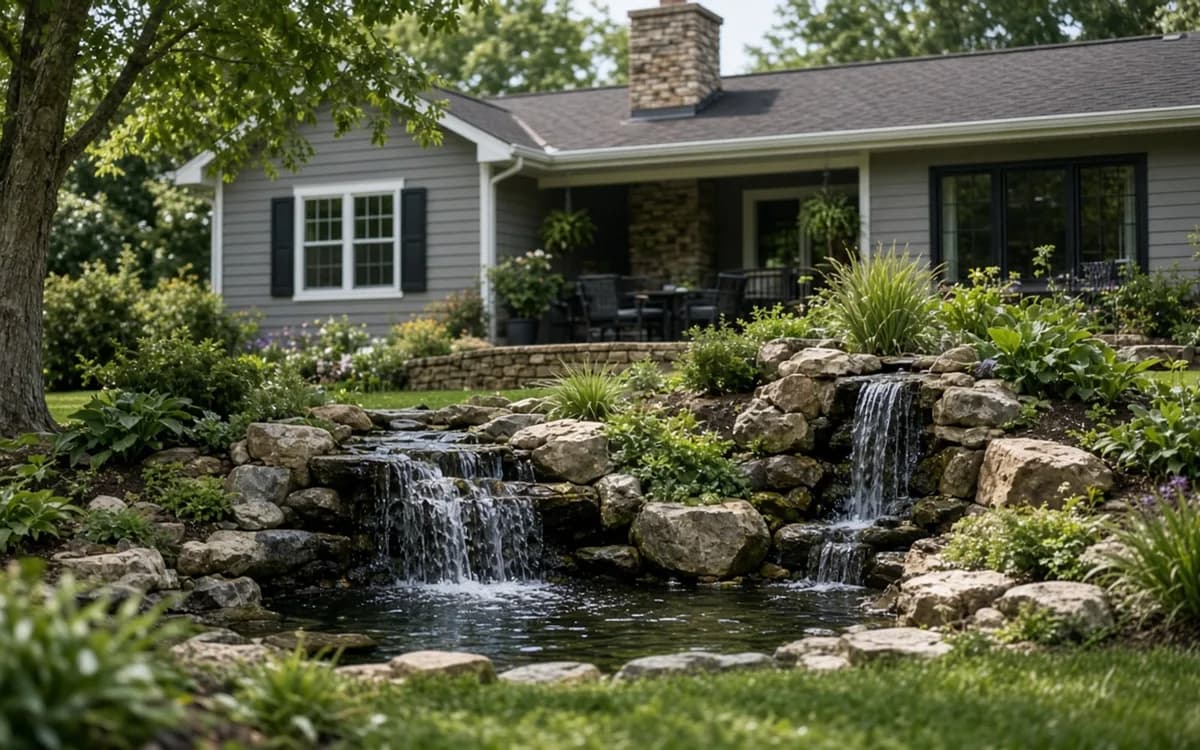
Pool Plan Compass · Water Features & Waterfalls cost guide
Bob Vila puts most pool water features at $450 to $5,000, with bubblers and deck jets at the low end and sheer descents and small waterfalls higher. Large rock waterfalls and infinity edges cost far more; Fixr puts infinity edges at $20,000 or more. A dedicated pump, lighting and plumbing often add as much as the feature itself.
Water features are some of the most visible parts of a pool, and some of the easiest places to overspend. The fixture itself is often the smallest part of the cost. Plumbing, pumps, valves, lighting and structural work usually add more, especially for raised walls and rock waterfalls. Knowing where the money goes helps you choose features that give the most for the budget.
This page explains how feature costs stack, which pieces are fixed costs and which scale with size, and where to save. The cost table and calculator on this page give per-item ranges. The water features page explains how each feature works. Read it first if you are deciding between feature types, since this page assumes you already know which effect you want.
| Item | Low | High | Unit | Notes |
|---|---|---|---|---|
| Bubbler, installed on ledge | $450 | $1,200 | flat | Bob Vila 2026 low end |
| Deck jets, per pair | $800 | $2,000 | flat | |
| Sheer descent, 18 to 36 inch | $1,000 | $3,000 | flat | Plus raised wall if none exists |
| Rock waterfall | $3,000 | $15,000 | flat | Natural stone at the top of range |
| Dedicated feature pump and circuit | $1,200 | $3,000 | flat | Variable-speed pump plus electrical |
| LED feature lighting | $1,000 | $2,000 | flat | Fixr |
| Infinity edge | $20,000 | $26,000 | flat | Fixr; catch basin and structure |
Bob Vila's 2026 remodel guide prices pool water features at $450–$5,000. Bubblers on a tanning ledge and deck jets sit at the lower end because they need little structure. Sheer descents cost more because they need a raised wall and a dedicated water supply. Scuppers and spillways fall in between, depending on the wall they sit in.
Rock waterfalls vary the most. A small kit waterfall can be modest, while a custom boulder waterfall with a grotto or slide can cost as much as a spa. Infinity edges sit at the top. Fixr's add-on list prices infinity edges at $20,000 to $26,000 or more, because a vanishing edge needs a catch basin, extra structure and a dedicated pump.
Most features need more water flow than filtration alone provides. Small bubblers can run off the main pump with a valve, but larger features usually need a dedicated pump, its own plumbing run and sometimes a separate circuit. That pump adds equipment cost, electricity and a slot on the equipment pad. Our analysis of EIA's 2024 household survey found only 47.7% of pool homes report a variable-speed pump, so many existing pads need a pump upgrade before a feature is added.
Lighting turns features into night-time focal points. LED lights in a sheer descent, a waterfall or deck jets add fixtures, wiring and controls. Automation lets you run features on schedules or from a phone, which helps control energy use. Pentair notes variable-speed pumps can cut pump energy by up to 90%, and the same principle applies to feature pumps.
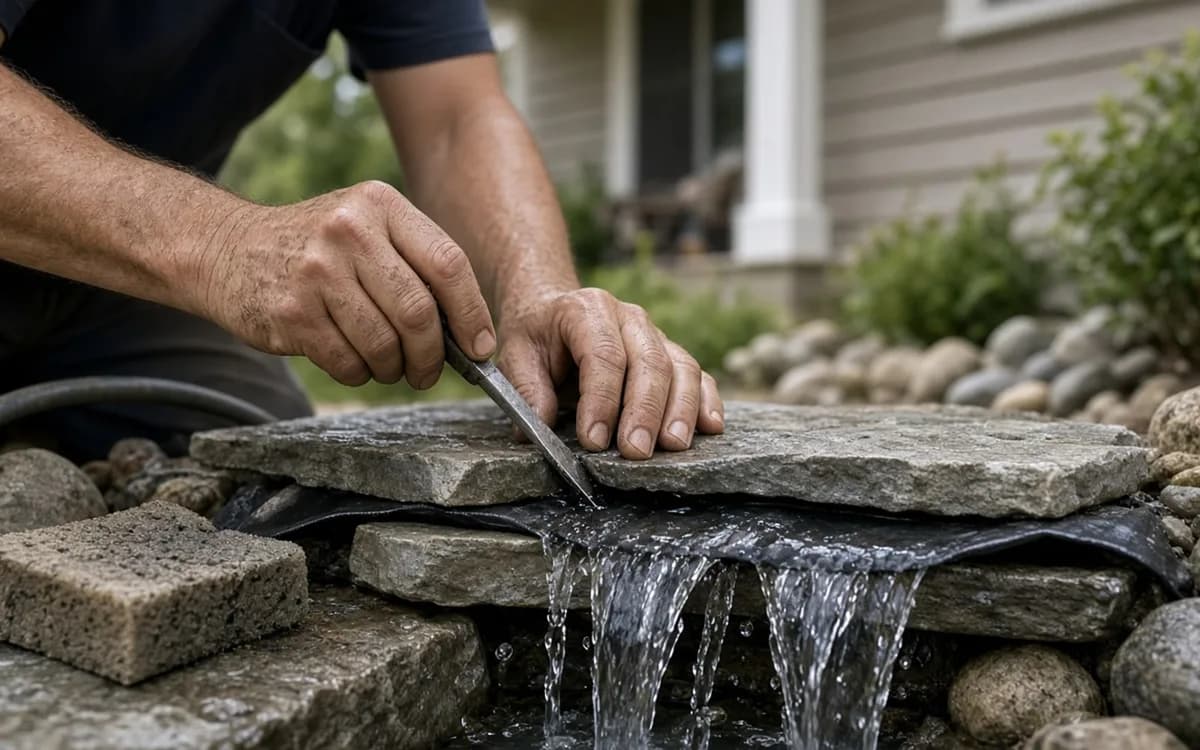
Labor share depends on complexity. A bubbler installed during construction is mostly plumbing labor and a small fixture. A sheer descent needs masonry work for the raised wall plus plumbing and possibly electrical. A rock waterfall is heavily labor-intensive, with structural work, boulder placement and careful waterproofing. It is also the feature where craftsmanship shows most, so ask to see finished examples.
Retrofitting features into an existing pool adds labor because the deck may need to be cut, plumbing trenched and finishes patched. That is why adding features during the original build is almost always cheaper. If budget is tight, ask the builder to install plumbing stubs and conduit for features you may add later. Bob Vila prices LED lighting at $450 to $1,700 in a remodel, and pairing a feature retrofit with a deck or tile repair saves a second round of cutting.
Running costs include pump electricity, extra water loss from evaporation and splash, and higher chemical demand from aeration. Features that spray water into the air cool the pool and raise evaporation. Features run only when you are outside cost far less than features running all day. Automation makes a feature easy to run only when it is wanted, which keeps the running cost small.
Regional climate matters. Our analysis of EIA's 2024 survey found 35.8% of U.S. pool homes report a heating fuel and 49.6% of Western ones do, and in those homes a feature that cools the water adds to heating cost. In hot climates, the cooling effect can be welcome. Put features on schedules and use variable-speed pumps to keep costs down.
Features built with the pool share excavation, plumbing and deck work, so their marginal cost is lower. Adding features later means cutting into the deck, trenching and patching finishes. The cost of a later retrofit can exceed the cost of building the feature from the start. Plumbing stubs and conduit cost little during construction.
Structural features such as raised walls, rock waterfalls and infinity edges are best designed at the start because they affect the shell and bond beam. Smaller features such as deck jets can sometimes be added later with less disruption. The planning guide explains how to phase a project. Settle the structural features first, then decide on smaller ones as the budget allows.
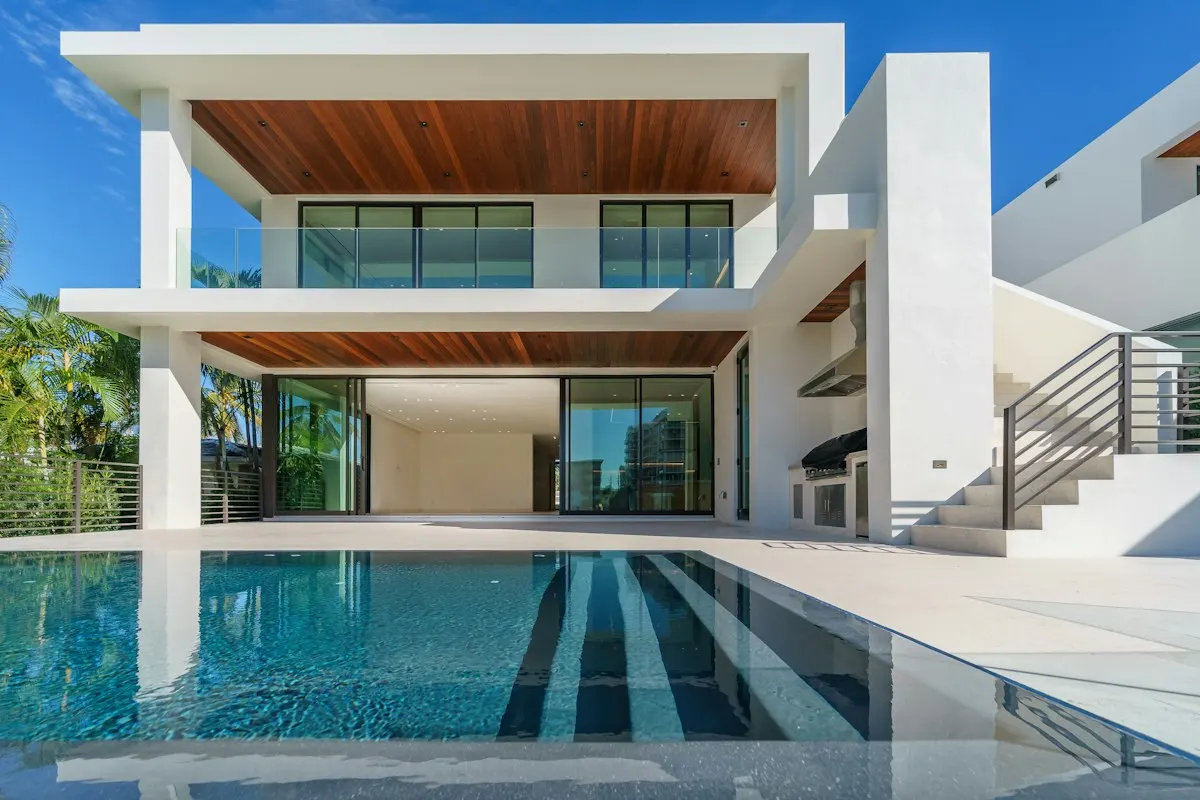
Save by choosing one well-placed feature rather than several small ones, using bubblers or deck jets instead of a large waterfall, and sharing pumps where possible. Features that face the house or patio give more enjoyment per dollar than features at the far end of the pool. Consider sight lines from inside the house as well as from the deck.
Spend on plumbing quality, pump efficiency and waterproofing, since leaks and pump failures are the costliest problems with features. If you want a feature that sounds good, spend on a design that lets you control flow. The calculator and the estimate request help you price features alongside the pool. Ask builders to price each feature as a separate line so you can add or drop them easily.
By the numbers
Planning figures from published U.S. sources; every card links to where the number came from.
$450–$5,000
Pool water features such as waterfalls and fountains cost $450–$5,000 to add
Bob Vila's 2026 pool remodeling guide prices water features alongside LED lighting at $450–$1,700 and slides at $1,000–$15,000. Sheer descents and bubblers sit at the low end; custom rock waterfalls and grottos run far higher.
Bob Vila, Pool Remodel Cost (2026)$3,594–$10,782
Auto covers add $3,594–$10,782; saltwater $1,008–$2,620; infinity edge $20,000+
Fixr's swimming pool cost guide (national average $44,688) itemizes popular add-ons, including lighting at $1,000–$2,000 and diving boards at $570–$6,022. An infinity or vanishing edge adds $20,000–$26,000 or more.
Fixr, Swimming Pool Cost (2024)Up to 90%
Variable-speed pumps cut pump energy up to 90%; DOE rules took effect July 2021
Pentair's DOE regulation page says the Dedicated Purpose Pool Pump rule effectively requires variable-speed for most residential pumps and cites DOE potential savings of about $550 a year in operating cost. With more than 8.5 million U.S. pools, this is now the default spec for new builds.
Pentair, Pool Pump DOE Standards (2021)49.6%
of Western pool homes report a pool heating fuel, the highest regional share
Roughly half of Western pool homes heat, with natural gas at 28%, per EIA's 2024 survey. Dry air also makes the West the region where evaporation from water features costs the most.
EIA 2024 Residential Energy Consumption Survey (preliminary microdata, May 2026) (2024)The calculator uses the same pool and spa construction benchmarks as this guide. Set the size and tier, then request a written estimate to check it against a real proposal.
Homeowner polls
No votes yet. Yours will be the first. · saved on this device
No votes yet. Yours will be the first. · saved on this device
Usually yes. A sheer descent needs a raised wall and a dedicated water supply, but its structure is simpler than a custom rock waterfall. Rock waterfalls involve boulder placement, structural support and waterproofing, which add labor. Costs overlap at the low end of rock waterfalls and the high end of sheer descents, so compare specific designs.
Small features such as bubblers can often run off the main pump with a valve. Larger features, especially sheer descents, rock waterfalls and infinity edges, usually need a dedicated pump to provide enough flow without affecting filtration. A dedicated pump adds equipment, electricity and maintenance costs.
Lighting costs depend on the number of fixtures, wiring distance and controls. LED lights are efficient and long-lasting, and color-changing options add ambiance. The cost table on this page includes a typical range for feature lighting. Plan lighting during construction to avoid cutting into finished surfaces later.
Yes, but features must be planned so they do not damage the liner. Deck jets, bubblers and some sheer descents work well on vinyl pools. Raised walls and rock waterfalls need careful waterproofing and support outside the liner. Ask the builder how the feature connects to the pool without puncturing the liner.
Features can make a pool more attractive in listings, but buyers rarely pay dollar for dollar for them. A clean, working feature helps first impressions. A broken or leaking feature becomes a repair item. Build features for your own enjoyment rather than as an investment.
Expect periodic cleaning of nozzles, scale removal, pump servicing and occasional replacement of lights or valves. Features in hard water regions scale faster. Winterizing features in freeze climates adds labor. Budget a modest annual amount and more for pump replacement after several years.
Yes. A remodel is a good time to add features because the pool is already being worked on. The cost depends on how much deck and plumbing work is needed. Combining a feature with resurfacing or deck replacement often reduces total cost compared with separate projects.
 Custom Pool Design & Build · Cost guideInground pool cost breakdown: where each dollar of a 2026 build goes
A 2026 inground pool typically costs $41,835 to $65,909 on national averages from HomeAdvisor and Angi, before a large deck, spa or landscaping.
 Spa & Hot Tub Installation · Cost guideHot tub and spa installation cost: unit, pad, power and delivery
HomeAdvisor puts a new portable hot tub at about $6,000 installed on average, with a typical range of $2,000 to $11,000, and an in-ground hot tub at about $15,000.
 Pool Decking & Coping · Cost guidePool deck and coping costs: per square foot, per linear foot, per project
Concrete Network prices concrete pool decks at $6 to $18 or more per square foot, while River Pools puts pool patios at $10 to $50 or more depending on material.
 Service guideWater Features & Waterfalls
Water features add sound and motion to a pool through sheer descents, bubblers, deck jets, scuppers, spillover spas or rock waterfalls.
Service guideCustom Pool Design & BuildCustom pool design and build covers everything from the site plan to first swim: excavation, the shell in gunite, fiberglass or vinyl, equipment and plumbing, electrical and bonding, the barrier, startup and training.
Service guideSpa & Hot Tub InstallationSpa and hot tub installation covers the base, the delivery route, the dedicated electrical circuit with GFCI protection, drainage around the unit, and the cover and access arrangement that make it usable every week.
 Free toolInground pool cost calculator
Size, material tier and complexity in, a realistic budget range out.
 Free toolPool and spa comparisons, decided by your conditions
Side-by-side tables for the decisions that change the price most.
 Free toolPool planning quiz: nine things to know before the first site visit
9 questions that show what you already know and what to check next.
 Free toolPool planning polls
See what other planners chose and add your vote.
Tell us the size, the condition of what is there now, and what you want to change. Pool Plan Compass passes your request to independent local professionals, who reply with written, no-obligation estimates. The service is free to use.